
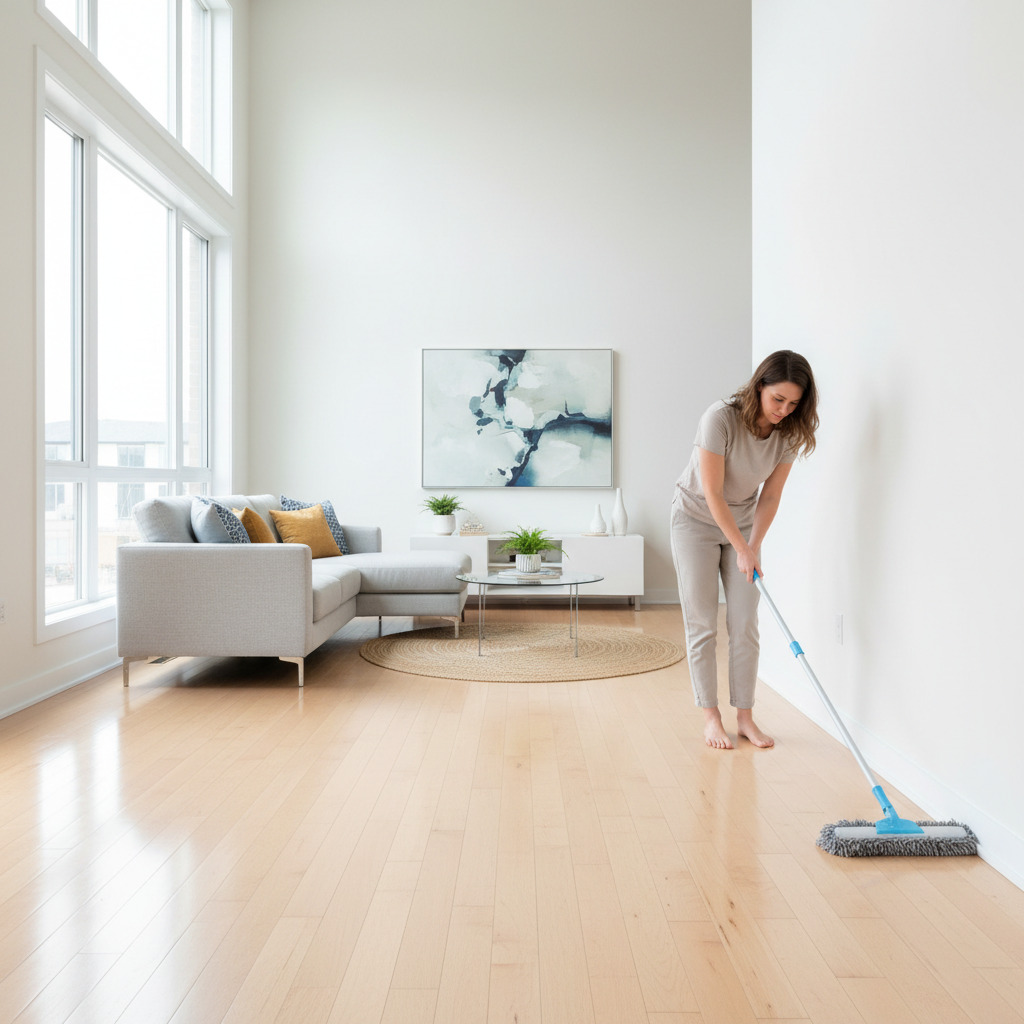
Baseboard dust removal is the focused cleaning of trim where floors meet walls to eliminate dust, pet hair, and allergens. In Saskatoon homes, HAARSH KLEAN pairs edge vacuuming, microfiber dusting, and a light damp wipe for a crisp finish. This quick routine extends the life of weekly cleans and supports healthier indoor air.
By Harsh Kewlani • Founder, HAARSH KLEAN
Last updated: May 9, 2026
At a Glance
Baseboard dust builds fast where air slows near walls. A simple sequence—vacuum the edge, dust with microfiber, then lightly damp-wipe—erases the gray line and keeps rooms cleaner for 2–4 weeks. Pair this with door mats, a shoes-off habit, and good filtration for longer-lasting results.
- What you’ll learn: why dust collects on trim, the 7-step process, and tools that actually work.
- Who this helps: busy families, pet owners, seniors, renters, and Saskatoon landlords.
- When to do it: light weekly maintenance, seasonal deep cleans, and before move-in/move-out.
- Tools list: vacuum with crevice tool, microfiber cloths, electrostatic duster, gentle cleaner, cotton swabs.
- Outcomes: sharper-looking rooms, fewer sneeze triggers, and less time re-cleaning edges.

What Is Baseboard Dust Removal?
Baseboard dust removal is targeted trim cleaning to lift settled dust, hair, and debris from edges where floors meet walls. The aim is cleaner air and sharper room lines. The most effective workflow uses dry methods first (vacuum, microfiber) and a light damp wipe to finish.
In everyday terms, it’s erasing the gray line. That edge forms as airflow slows near walls and particles drop out. We see heaviest buildup in hallways, near vents, behind doors, and around furniture feet. Starting dry avoids turning dust into mud. A quick damp finish removes smudges without soaking wood or paint.
For Saskatoon households—especially with kids and pets—edges trap crumbs and fur quickly. That’s why we bake baseboard care into our Daily & Weekly Cleaning and give it extra attention during Deep Cleaning and Move In/Out Cleaning. In rental turnovers, crisp trim often makes or breaks first impressions.
Why Baseboard Dust Removal Matters
Edges are dust magnets. Cleaning baseboards reduces allergen reservoirs, improves room appearance, and limits recirculation of particles. With doormats, shoes-off habits, and balanced humidity, baseboard care supports cleaner air and better-looking spaces between full cleanings.
Household dust is a mix of skin cells, textile fibers, pet dander, pollen, and tracked-in grit. The perimeter of a room acts like a gutter for this mix. Every time someone walks by, a bit gets kicked back into the air. Regular edge care shrinks that reservoir. Microfiber traps particles better than cotton, and HEPA vacuums hold onto the fine stuff that ordinary filters can leak.
In our experience, typical hallways show a visible edge line in 10–14 days without maintenance. A fast weekly edge pass prevents that cycle. Homes with heavy shedding pets see 2× more visible fuzz at the perimeter; adding one extra pass during shedding weeks makes a noticeable difference.
How Baseboard Dust Builds Up—and How to Stop It
Dust collects on baseboards where airflow slows and eddies. Foot traffic, HVAC currents, and dry-air static pull particles to edges. Reduce buildup with better filtration, entry mats, humidity control, and a quick weekly edge vacuum plus microfiber dust.
Three forces drive the gray line you see on trim:
- Airflow: HVAC vents, door swings, and people moving create eddies that drop particles along walls.
- Gravity: Heavier particles settle fastest, landing on ledges like the top of baseboards.
- Static: In dry indoor air (common in Saskatoon winters), dust clings more aggressively to painted surfaces.
Prevention is practical, not complicated. Upgrade to the highest MERV filter your system supports (many homes do well with MERV 11–13). Place two-stage entry mats (outside and inside) to stop grit that scuffs trim and binds dust. Keep humidity roughly 30–50% to limit static and dust mites. Then schedule a 10–15 minute weekly edge routine per level to stay ahead.
Step-by-Step: Baseboard Dust Removal (7 Steps)
Tackle baseboards in 7 steps: prep, vacuum edges, dry dust the top, detail corners, damp wipe, dry immediately, and finish floors. Work clockwise, top-to-bottom, and swap cloths as they load. This order delivers a streak-free, lint-free finish without rework.
- Prep the zone. Slide light furniture forward a few inches. Turn off ceiling and portable fans so airborne dust can settle. On hard floors, place a towel along the wall to catch loosened debris.
- Vacuum edges. Use a crevice tool to pull debris from the floor/trim seam. Follow with a soft brush attachment across profiles and quarter round. This removes grit so you don’t scratch paint later.
- Dry dust. Glide a clean microfiber along the top edge and face, keeping even pressure. For ornate trim, an electrostatic duster lifts particles from grooves without pushing them deeper.
- Detail corners and seams. Wrap a microfiber over a plastic putty knife to reach the small lip under the top edge. Cotton swabs help at tight joints and where quarter round meets baseboard.
- Damp wipe. Lightly mist your cloth with water or a gentle, paint-safe cleaner. Wipe small sections. Avoid soaking wood, seams, or raw ends.
- Dry immediately. Follow with a dry cloth to prevent water marks and protect sheen. This step also removes any last fine lint.
- Finish the floor strip. Vacuum or mop the adjacent 6–12 inches of floor so the whole perimeter looks uniformly clean.
Timing helps. In an average main floor, a full 7-step pass typically takes 20–35 minutes depending on furniture and trim complexity. Kitchens, baths, and main entryways need the most care because moisture and grit bind dust more tightly.

Methods and Tools: What Actually Works
Use dry methods first, then damp. The winning combo is a vacuum with crevice and brush tools plus quality microfiber. Electrostatic dusters speed weekly passes. Save cleaner for stuck grime, and always spot-test painted or stained trim before liquids.
Core tools
- Vacuum with crevice tool: Pulls debris from the floor/trim seam and corners.
- Soft brush attachment: Lifts dust from decorative profiles and quarter round without scuffing.
- Microfiber cloths: Split fibers trap fine dust; color-code by room to avoid cross-mixing.
- Electrostatic duster: Fast coverage for long, straight runs during weekly maintenance.
- Gentle cleaner + water: For smudges and stuck grime only; mist the cloth, not the wall.
- Plastic putty knife + cloth: Safely reaches the tiny lip under the top edge and tight seams.
When to use each method
- Weekly maintenance: Vacuum edges + electrostatic pass; 10–15 minutes per home level.
- Monthly refresh: Add a microfiber wipe to restore a crisp, bright edge.
- Seasonal deep clean: Full 7-step sequence with extra detailing in kitchens, baths, and entries.
- Move-in/move-out: Pair baseboard care with inside cabinet cleaning, appliance cleaning, and window tracks.
| Tool | Best for | Pros | Watch-outs |
|---|---|---|---|
| Microfiber cloth | General dust removal | Traps fine dust, reusable | Needs frequent rinsing |
| Electrostatic duster | Fast weekly passes | Great coverage, quick | Can just move dust if overused |
| Vacuum crevice tool | Edge seams | Removes grit and hair | Hard plastic can scuff paint |
| Soft brush tool | Profiles and quarter round | Gentle on trim | Lower suction than crevice tool |
| Baseboard mop | Long hallways | Ergonomic reach | Can over-wet if not careful |
Safety first. If you’re using any cleaner, ensure good ventilation and avoid mixing chemicals. For a general perspective on staying safe while cleaning, see this practical cleaning hazards overview. It reinforces common-sense precautions like gloves, ventilation, and spot-testing.
Best Practices for Cleaner Baseboards, Longer
Prevent the edge line with entry control, filtration, and a quick weekly pass. Use two-stage door mats, adopt a shoes-off routine, change HVAC filters on schedule, and keep indoor humidity balanced. Always dry trim after a damp wipe to protect paint and wood.
- Entry control: Two-stage mats (outside and inside) capture grit before it meets paint.
- Shoes-off habit: Reduces tracked-in soil that binds dust and scuffs trim.
- Filter discipline: Use the highest MERV your system supports and replace it on schedule.
- Humidity balance: Target about 30–50% relative humidity to limit static and dust mites.
- Textile strategy: Launder throws, rugs, and pet blankets often to cut lint and fuzz at the perimeter.
- Finish strong: Dry immediately after damp wiping to keep edges bright and streak-free.
Edge dust is part of the bigger indoor air story. Keeping ducts clean, sealing obvious leaks, and using proper filtration reduce particle loads that settle on trim. For a homeowner-friendly primer on airflow and dust, this short note on duct cleaning and air quality offers useful context.
Local considerations for Saskatoon
- Winter is dry. Static makes dust cling to painted trim—add humidity to stay in the 30–50% band.
- Spring melt brings grit. Longer door mats and a shoes-off rule protect white baseboards.
- Pet season spikes shedding. Schedule an extra edge pass during heavy-shedding weeks.
Tools and Resources We Trust
Choose a vacuum with strong edge suction and a true crevice tool, stock quality microfiber, and keep a paint-safe cleaner on hand. HEPA models trap finer particles. For long hallways, an extendable baseboard duster saves your back during weekly passes.
For households that want help, our Daily & Weekly Cleaning includes perimeter vacuuming and microfiber dusting; Deep Cleaning adds detailed damp-wipe finishing in kitchens, baths, and entries. Move In/Out Cleaning pairs baseboards with inside cabinet cleaning, appliance cleaning, and window tracks so everything feels truly new.
If you’re building a simple supplies kit, a practical checklist style article like this take on cleaning faster reinforces the value of process: stage tools, work top-to-bottom, and go dry-to-wet. The same logic powers fast, effective baseboard care.
Prefer a pro touch? We can take baseboards off your to-do list. Add edging to your weekly plan, or book a seasonal Deep Cleaning for a wall-to-wall reset—ideal before hosting, moving, or welcoming long-stay guests.
Real-World Examples from Saskatoon Homes
Baseboard care is small work with big impact. In family homes, rentals, and seniors’ residences, a 20–30 minute edge routine sharpens room lines and reduces recirculated dust. Combining door mats, weekly edging, and seasonal deep cleans keeps trim bright through winters and busy summers.
Busy family with pets
- Situation: Fur tumbleweeds and gray edge lines in halls and kids’ rooms.
- Approach: Weekly vacuum edging plus an electrostatic duster pass; quarterly Deep Cleaning with damp-wipe finish in entries and around pet beds.
- Outcome: Edges stayed clean for 2–3 weeks; fewer sneeze triggers near the floor; faster Saturday tidy-ups.
Move-out inspection
- Situation: White trim showed visible dust lines that could fail a walkthrough.
- Approach: Full 7-step sequence plus wall-plate and vent dusting; finished with a floor mop in the perimeter strip.
- Outcome: Crisp, photo-ready edges helped the rental show better for the next viewing.
Seniors’ residence
- Situation: Low-airflow zones around furniture collecting dust on dark-stained trim.
- Approach: Gentle vacuuming with a soft brush tool and microfiber; no harsh cleaners; immediate dry.
- Outcome: Fresher look without odors or residue; no sheen loss on the wood finish.
Baseboard Dust Removal: FAQ
Keep baseboards clean by pairing a quick weekly edge pass with seasonal deep cleaning. Use a vacuum crevice tool first, microfiber next, and a light damp wipe only when needed. Manage humidity, filtration, and entry mats to slow dust return.
How often should I clean baseboards?
Plan a light edge pass weekly and a more detailed damp wipe every 1–3 months. Homes with pets or high traffic benefit from an extra monthly microfiber wipe to keep edges crisp.
What’s the fastest way to remove baseboard dust?
Use a vacuum with a crevice tool along the floor/trim seam, then run a clean microfiber cloth across the top edge. In most rooms, this two-step dry method erases the visible line in minutes with no drying time.
Can I use all-purpose cleaner on painted baseboards?
Yes—sparingly. Lightly mist the cloth, not the wall, and spot-test first. Avoid soaking seams or bare wood. Always dry immediately to protect paint sheen and prevent water marks.
What about wood-stained trim?
Stick to dry methods first. If needed, use a damp cloth with a wood-safe cleaner recommended for your finish and dry at once. Avoid ammonia or abrasive pads that can dull the sheen.
Do I need a HEPA vacuum?
It helps if allergies are a concern. HEPA filtration traps very fine particles that some standard filters can recirculate. Use proper bags and gasket seals for the best results.
Conclusion and Next Steps
Baseboard dust removal is simple and high-impact: vacuum edges, microfiber the top, and lightly damp-wipe when needed. Pair that with mats, shoe-off habits, balanced humidity, and timely filter changes to keep edges clean longer—and rooms feeling fresher.
- Key takeaways: Work dry-to-wet, control entry grit, balance humidity, change filters on schedule.
- Action steps this week: Add a 10-minute edge pass, place a second door mat, and launder pet throws.
- Need a hand? If time, mobility, or allergies make edge work tough, add it to your weekly plan or book a Deep Cleaning with HAARSH KLEAN in Saskatoon.
HAARSH KLEAN
Need help keeping your home clean?
Book professional residential cleaning in Saskatoon and surrounding areas. Same cleaner, personal service, and a clean home you can actually enjoy.
Get Free Quote