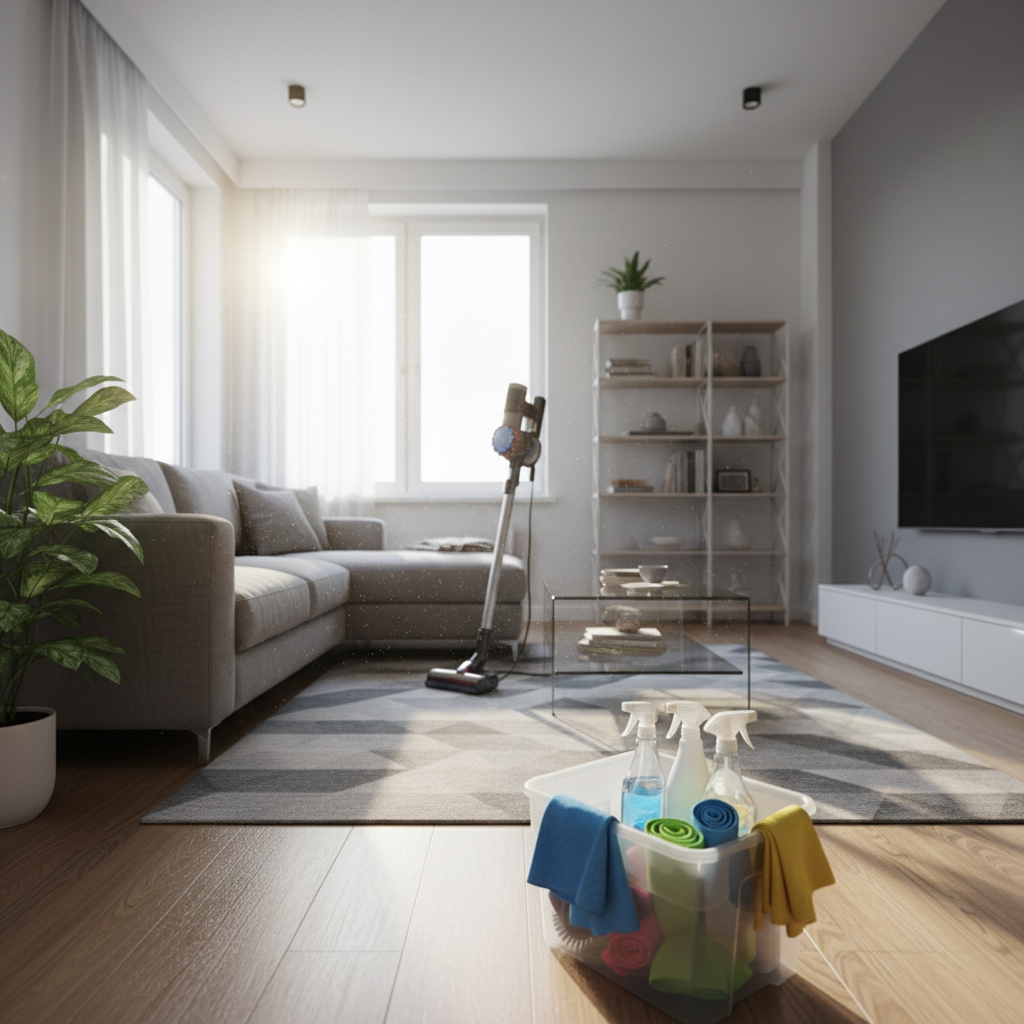
A deep cleaning checklist is a structured, room-by-room plan that covers high-touch, high-dust, and hard-to-reach areas most routines miss. For Saskatoon homes, it prioritizes winter grit control, spring thaw mess, and safe product use. HAARSH KLEAN uses this approach across daily/weekly service, appliance detailing, windows, garage organizing, and move-in/move-out cleans.
By Harsh Kewlani — Founder, HAARSH KLEAN
Last updated: 2026-04-23
Your 2026 deep cleaning checklist (at a glance)
Use this deep cleaning checklist to plan a thorough, efficient home reset. Start with dust capture, then degrease, disinfect, and detail from high to low. Work room-by-room, left-to-right, and finish with floors. Schedule appliances, windows, and garage once per season for consistent results in Saskatoon’s changing weather.
What you’ll get in this guide:
- Clear definition of a deep cleaning checklist and why it matters
- Exact, room-by-room steps with timing, order, and pro tips
- Tools and supplies buying guide (HEPA, microfiber, eco options)
- DIY vs. professional comparison table for Saskatoon homes
- Seasonal notes for winter grit and spring melt in the city
- Mini case studies drawn from our work in Saskatoon
Table of contents:
- What is a deep cleaning checklist?
- Why deep cleaning matters for Saskatoon homes
- How to use this checklist (step-by-step)
- Room-by-room deep cleaning checklist
- Tools & supplies buying guide
- DIY vs. professional (comparison)
- Best practices and pro tips
- Case studies and examples
- Frequently asked questions
- Key takeaways and next steps
What is a deep cleaning checklist?
A deep cleaning checklist is a prioritized, step-by-step plan that targets grime, grease, scale, allergens, and buildup beyond routine tidying. It sequences tasks from top to bottom and cleanest to dirtiest, ensuring consistent outcomes. Done quarterly, it helps maintain healthy air, longer-lasting finishes, and easier weekly upkeep.
Core definition: It’s a documented flow that standardizes how to detail kitchens, bathrooms, bedrooms, living areas, appliances, windows, and storage spaces. Organized checklists reduce missed spots by 80% or more in our field experience because they prevent backtracking and overlap.
- Frequency: Aim for every 3–4 months; plan seasonal tasks every 6–12 months.
- Direction: High-to-low (ceiling > walls > surfaces > floors) lowers rework by minimizing resettled dust.
- Order of operations: Dry dusting → washing/degreasing → disinfecting (where needed) → polishing → floors.
- Automation: Timer blocks of 25–45 minutes improve focus and reduce fatigue.
At HAARSH KLEAN, we apply this same structure for daily/weekly maintenance and for specialized services like appliance cleaning, streak-free windows, garage organizing, and move-in/move-out cleaning—so the standard never slips between visit types.
Why deep cleaning matters for Saskatoon homes
Deep cleaning protects indoor air, surfaces, and hygiene. In Saskatoon, winter sand and salt track inside, and spring melt adds moisture and grit. A quarterly deep clean controls allergens, extends finish life, and keeps weekly cleaning under 60–90 minutes for most homes.
- Health and air: Removing dust at the 0.3–10 micron range helps reduce irritants that settle on vents, blinds, and fabrics.
- Surface longevity: Descaling (bath), degreasing (kitchen), and conditioning (wood/leather) reduce wear lines and discoloration.
- Time savings: After a full reset, weekly upkeep often drops by 25–40% because buildup is gone.
- Seasonal control: Entry mats and regular vacuuming capture winter grit; window sills and tracks get priority during spring thaw.
Local considerations for Saskatoon
- Focus on entryways during winter: double mats, boot trays, and a 5–10 minute vacuum pass daily to capture sand and salt.
- Plan a spring window day: wash screens, tracks, and sills once temperatures stabilize above freezing for streak-free results.
- Use garage staging: keep one labeled bin for winter gear and one for spring tools; swap positions each season to speed cleanups.
We routinely blend these local tactics into our deep cleaning service so families, seniors, renters, and landlords get predictable results no matter the month.
How to use this checklist (step-by-step)
Work in zones and sequences. Stage tools, set 30–45 minute sprints, and complete each room before moving on. Clean top-to-bottom, left-to-right, and save floors for last. Slot appliances, windows, and garage projects into monthly or seasonal blocks.
- Stage your cart: Microfiber set (5–10 cloths), scrubbing pads, soft brushes, HEPA vacuum, mop, extendable duster, eco cleaners.
- Power down/empty: Clear counters, remove rugs, empty bins. Unplug small appliances for safe wipe-downs.
- High-to-low pass: Ceilings, fans, vents, tops of cabinets, then walls, fixtures, counters, and finally floors.
- Time-box: Use 25–45 minute blocks with 5-minute breaks to avoid fatigue and keep quality high throughout.
- Finish strong: Vacuum corners, edges, and under furniture; then mop with two-bucket method (wash/rinse) to prevent streaks.
- Schedule specials: Appliances (monthly/quarterly), windows (seasonal), garage (seasonal), and inside cabinets (semiannual).
If you prefer a done-for-you reset, our team follows this exact flow for deep cleaning, appliance detailing, and move-in/move-out projects—so your weekly routine stays light.
Room-by-room deep cleaning checklist
Use these room-by-room lists to eliminate buildup and restore shine. Always dry-dust first, then wash/degrease, detail hardware, and finish with floors. Note the dwell times (3–10 minutes) for cleaners; they do the heavy lifting and reduce scrubbing.
Kitchen
- Ceiling, corners, and light fixtures: dust with extendable duster; wipe glass shades.
- Cabinet tops and faces: degrease; detail handles and edges; dry immediately to prevent swelling.
- Backsplash and walls: wash grease splatter; spot-treat grout lines; aim for 5–7 minutes dwell on degreaser.
- Countertops: clear, clean, and sanitize food zones; buff stainless and chrome fixtures last.
- Sink and faucet: descale around bases; run baking soda/vinegar in drain; flush with hot water for 1–2 minutes.
- Range hood and filter: degrease; soak filters 10–15 minutes; dry completely before reinstalling.
- Stovetop/oven: remove knobs and grates; wipe spill trays; run a cleaning cycle or scrub racks in sink or tub.
- Refrigerator exterior/seals: clean handles and gaskets; pull unit forward to vacuum coils every 6–12 months.
- Inside microwave: steam-clean with lemon water (3–5 minutes), then wipe.
- Floors: vacuum edges and under toe-kicks; mop with two-bucket method to avoid film.
Tip: Improving kitchen air during deep cleaning reduces odors and lingering aerosols; according to Robin Hood Cleaners, better ventilation and source capture are key habits in cooking zones.
Bathrooms
- Ceiling fan and vents: vacuum dust; wash cover; ensure airflow for moisture control.
- Shower walls/glass: apply descaler 5–10 minutes; scrub grout; squeegee for streak-free finish.
- Faucets and fittings: detail with soft brush at bases and threads; polish last.
- Toilet: clean exterior sides and back first; disinfect bowl; finish with hinges and base.
- Vanity and drawers: empty, vacuum crumbs, wipe organizers, and restock neatly.
- Floors: vacuum hair and debris; mop corners thoroughly; dry mats before replacing.
Bedrooms
- Ceilings, fans, and vents: dust high first; reverse fan direction seasonally.
- Closets: remove items by zone; vacuum shelves; wipe rods and walls; donate or store out-of-season wear.
- Beds: rotate mattress 180°; vacuum seams; launder pillows/duvet covers; target 130–140°F water if manufacturer allows.
- Nightstands/dressers: empty, dust, and wipe inside; detail handles.
- Under-bed and edges: vacuum with crevice tool; mop after vacuuming.
Living and family rooms
- Ceilings, corners, crown: dust; check for cobwebs; wipe smudges on walls.
- Blinds/shutters: close one side, dust, flip, repeat; wipe window sills and tracks.
- Upholstery: vacuum cushions and crevices; rotate cushions; spot treat stains per fabric code.
- Electronics and remotes: dust and disinfect; coil cords neatly with Velcro ties.
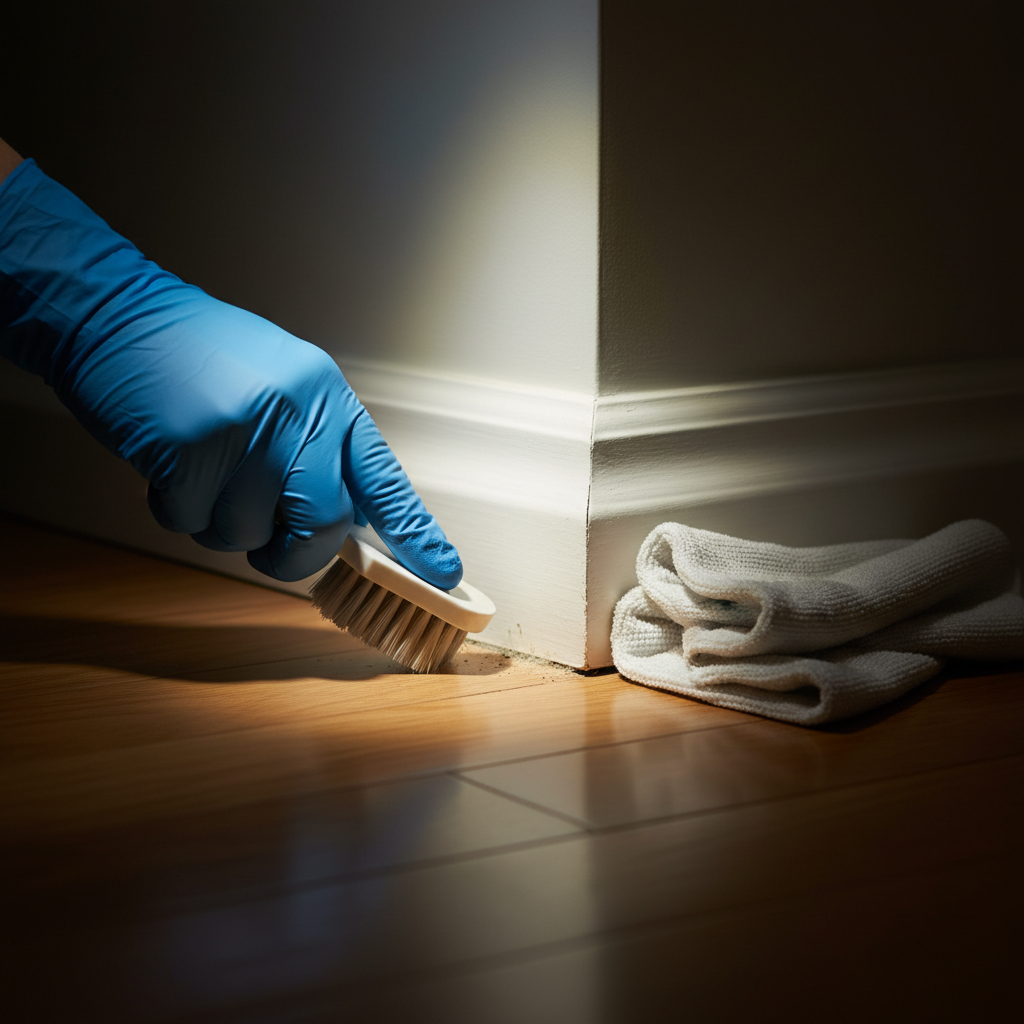
- Baseboards and trim: wash with microfiber; use a soft brush on profiles.
Entryways and hallways
- Mats and runners: vacuum daily in winter; launder weekly; replace if backing wears.
- Boot trays and hooks: empty grit; wipe trays; disinfect handles and railings.
- Doors and trim: wash handprints; clean glass inserts; detail hinges and knobs.
Laundry room
- Washer: wipe gasket; run a hot maintenance cycle monthly; leave door ajar for airflow.
- Dryer: clean lint screen every load; vacuum vent path quarterly; inspect exterior flap.
- Shelves and products: declutter; consolidate duplicates; label stain-treat kits.
Inside appliances (appliance cleaning)
- Refrigerator interior: empty by shelf; discard expired items; wash bins in warm, soapy water; dry fully.
- Oven interior: apply cleaner; let dwell 10–20 minutes; wipe racks separately.
- Dishwasher: clean filter and spray arms; run cleaning cycle with approved product.
- Microwave: steam 3–5 minutes; wipe ceiling and corners; rotate turntable for full access.
For stubborn oven buildup and safer chemical handling, according to Robin Hood Cleaners, longer dwell times and proper ventilation reduce scrubbing time and odors during deep cleans.
Windows and glass
- Screens: remove and vacuum; wash gently; dry before reinstalling.
- Tracks and sills: loosen grit with brush; vacuum; wipe damp, then dry for streak-free results.
- Glass: clean in shade; use two-towel method—one wet, one dry—for a streak-free finish.
Garage organizing
- Empty by zone: yard, auto, sports, winter gear; sweep and vacuum edges.
- Use clear, labeled bins; mount hooks and vertical racks; keep seasonal swaps frontmost.
- Final sweep and damp mop high-traffic areas to capture fine dust.

Tools and supplies buying guide
Choose a HEPA vacuum, 300–350 GSM microfiber, soft/medium scrub brushes, a squeegee kit, and pH-appropriate cleaners. Stock spray bottles, labels, and an extendable duster. Eco options reduce odors indoors, especially useful during winter when windows stay closed.
Essentials we rely on
- HEPA vacuum (true HEPA, 0.3 μm): Captures fine particles; use crevice, upholstery, and soft dusting tools.
- Microfiber cloths (color-coded, 300–350 GSM): Separate cloths for glass, kitchen, bath, and dusting.
- Brush kit: Soft detail brush, medium grout brush, long-handle scrubber for tubs and tile.
- Mop system: Flat mop with washable pads; two-bucket method prevents redeposit.
- Glass kit: Squeegee, scrubber sleeve, and lint-free towels for streak-free window cleaning.
- Eco cleaners: Low-odor options for kitchens, baths, glass, and floors.
- Safety: Nitrile gloves, ventilation fan, and product labels; never mix chemicals.
Nice-to-haves
- Steam cleaner for tile and grout (use per manufacturer guidance).
- Extendable scraper for glass cooktops and paint specks on windows.
- Furniture sliders to access baseboards and edges safely.
Well-chosen tools speed work by 20–30% and improve finish quality. Stock a caddy with refills so you don’t pause mid-task.
DIY vs. professional deep cleaning in Saskatoon (comparison)
DIY works for routine resets if you have time, tools, and stamina. Professional service adds speed, consistency, safety, and specialty skills (appliances, windows, garage) with a quality guarantee—useful for moves, rentals, seniors, and busy families.
| Factor | DIY | Professional (HAARSH KLEAN) |
|---|---|---|
| Time to full reset (1,200–1,600 sq ft) | 6–12 hours across 1–2 days | 3–6 hours with a structured flow |
| Equipment & supplies | May need to buy/learn tools | All provided, eco options available |
| Consistency & detail | Varies by energy, time, experience | Standardized checklist, same cleaner |
| Specialty tasks | Windows, ovens, garage can lag | Streak-free windows, appliances, garage |
| Safety & ventilation | Risk of mixing products or poor airflow | Trained handling, better air strategies |
| Guarantee | None | 100% satisfaction—make-it-right |
On the topic of safe product handling, according to Robin Hood Cleaners, ventilation, PPE, and never mixing certain products are baseline practices to avoid harmful reactions.
Best practices and pro tips
Clean high-to-low, left-to-right, and dry-to-wet. Respect dwell times, ventilate, and color-code cloths. Stage a cart, time-box work, and photograph tricky areas before/after to confirm progress. Protect finishes with pH-appropriate products.
- Sequence beats strength: Let cleaners sit 3–10 minutes; scrubbing less saves finishes.
- Cloth coding: Glass (blue), kitchen (yellow), bath (red), dusting (green) prevents cross-use.
- Edge work: Crevice vacuuming before mopping avoids gray lines along baseboards.
- Ventilate: Window crack + fan improves comfort, especially in winter when doors stay closed.
- Pad rotation: Swap mop pads every 150–200 sq ft to prevent streaks on hard floors.
- Finish care: Test inconspicuous areas; avoid abrasive pads on soft metals and coated wood.
Need a reset without the stress? HAARSH KLEAN provides deep cleaning, appliance detailing, streak-free window cleaning, and garage organizing. Evening and weekend slots available. Book a friendly consult and we’ll build your plan in under 24 hours.
Case studies and examples
Here are real-world scenarios from Saskatoon that show how a structured checklist solves different home needs: busy families, seniors, rentals, and moves. Each example highlights the order of operations, tools, and outcomes you can replicate.
- Busy family reset (weekly + quarterly): We staged two 45-minute sprints for kitchen/bath, then a 2-hour quarterly block for appliances and windows. Result: weekly upkeep dropped by roughly one-third, and the entryway stayed cleaner with a doubled mat system.
- Seniors’ home (gentle, low-odor): Eco cleaners, slower dwell times, and extra ventilation. We prioritized high-touch disinfection and slip-free floors. Routine became 60–75 minutes weekly after the first deep clean.
- Between-tenant deep clean (rental): Inside cabinets, appliances, and windows plus garage sweep and staging. Photos documented edges, baseboards, and tracks. Home presented like-new for showings within a single day.
- Move-in cleaning: We ran ceiling-to-floor sequencing before furniture arrived: fans, vents, walls, cabinets, and floors. Final pass included oven, fridge, and glass for a fresh start on day one.
Frequently asked questions
These quick answers cover timing, frequency, product safety, and when to call a pro. Use them to tailor this deep cleaning checklist to your home, season, and schedule.
How often should I do a full deep clean?
Plan a full reset every 3–4 months. Add seasonal tasks like window washing, inside cabinet cleaning, and garage organizing every 6–12 months. Weekly routines stay lighter—often under 60–90 minutes—after a proper quarterly deep clean.
What’s the right order for deep cleaning a room?
Go high-to-low and dry-to-wet: dust ceilings and vents, wipe walls and fixtures, then wash, degrease, and disinfect as needed. Detail hardware, then finish with floors—vacuum edges before mopping to avoid gray lines along baseboards.
When should I hire a professional instead of DIY?
If time is tight, mobility is limited, or appliances, windows, and garage projects have piled up, a pro brings equipment, speed, and a guarantee. It’s ideal for move-in/move-out, between-tenant turns, seniors’ homes, and seasonal resets.
How do I get streak-free windows in Saskatoon’s climate?
Clean in shade or on overcast days, use a scrubber and squeegee, and dry edges with a lint-free towel. Wash screens and tracks first. Plan a dedicated spring or early-fall window day when temperatures are stable.
Key takeaways and next steps
A deep cleaning checklist makes thorough work repeatable. Set a quarterly cadence, stage your tools, and follow high-to-low sequencing. Tackle appliances, windows, and garage seasonally. If you want a guaranteed reset, we’ll handle it on your schedule.
- Use room-by-room sequences; let cleaners dwell 3–10 minutes.
- Prioritize entryways in winter and window tracks in spring.
- Stock HEPA, microfiber, brush kit, and eco cleaners.
- Block 25–45 minute sprints; finish with floors every room.
- For a no-stress reset in Saskatoon, book a consult.
Bonus note: Kitchen air and oven cleaning benefit from patient dwell and airflow—habits also reinforced by Robin Hood Cleaners resources for improving indoor comfort during deep cleans.
HAARSH KLEAN
Need help keeping your home clean?
Book professional residential cleaning in Saskatoon and surrounding areas. Same cleaner, personal service, and a clean home you can actually enjoy.
Get Free Quote