
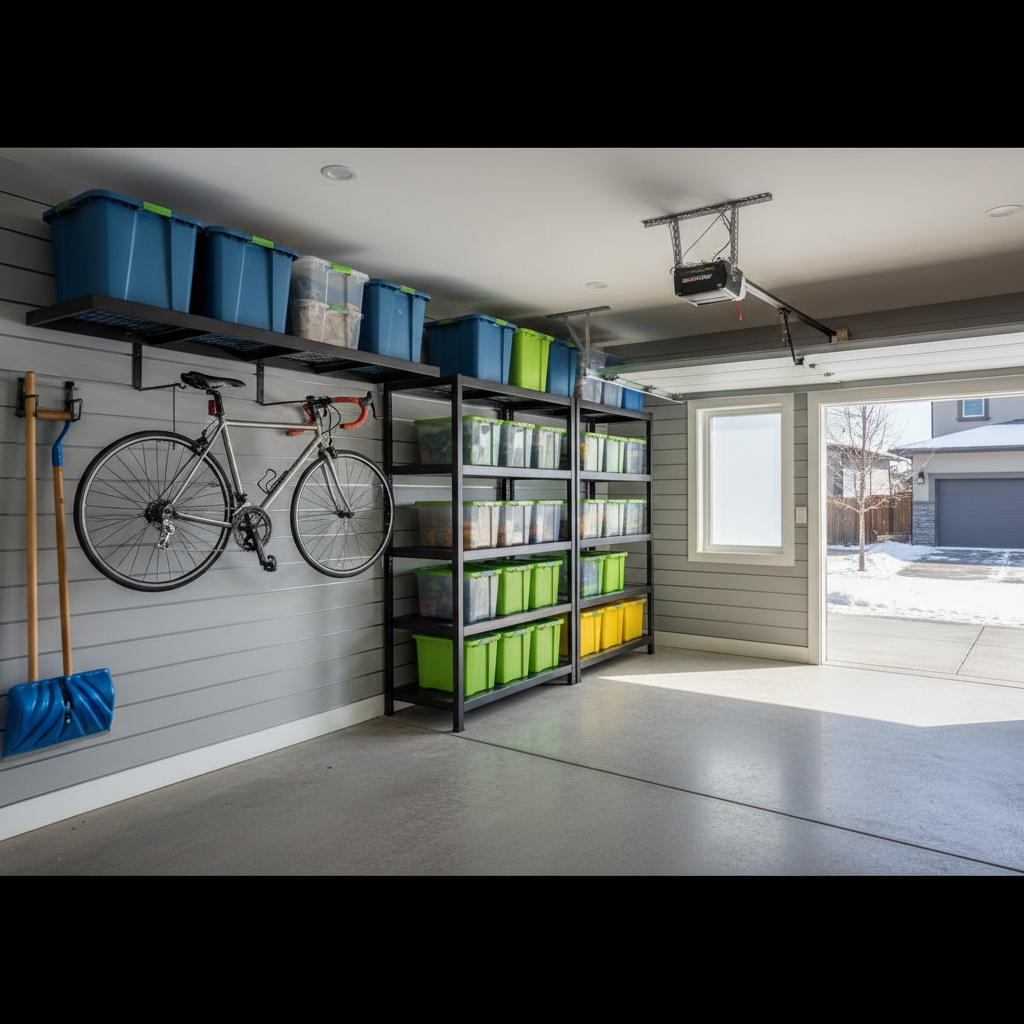
Garage organizing in Saskatoon is the systematic process of decluttering, zoning, and installing storage so you can find things fast in every season. It prioritizes vertical space, clear pathways, and labeled bins for quick retrieval. For busy households, HAARSH KLEAN’s one-on-one service turns a crowded garage into a safe, efficient extension of your home.
By Harsh Kewlani, Founder — HAARSH KLEAN
Last updated: May 9, 2026
Garage Organizing at a Glance + Table of Contents
Organize your garage by decluttering, creating zones, and installing storage that matches your gear and Saskatoon’s seasons. Start with a fast sort, mount wall systems, protect the floor, and label everything. Use this table of contents to jump to steps, storage comparisons, seasonal tips, and local considerations.
- Quick Summary
- What Is Garage Organizing?
- Why It Matters
- How It Works (Step-by-Step)
- Storage Systems & Approaches
- Best Practices
- Tools & Resources
- Local Case Studies & Examples
- Safety & Maintenance
- Seasonal Strategies
- Scheduling & Scope Factors
- FAQ
- Conclusion & Next Steps

Quick Summary
The fastest path to a tidy garage is a 3-part plan: declutter, zone, and mount storage. In Saskatoon, build for winter gear, road salt, and seasonal swaps. HAARSH KLEAN provides one-on-one planning, evening/weekend scheduling, and a satisfaction guarantee so your setup works on day one and stays organized.
- Timebox the purge: Two 45-minute passes clear 60–80% of visible clutter.
- Create 5 zones: Daily grab, sports, yard/snow, projects, long-term storage.
- Go vertical: Slatwall or rail systems free 20–40 square feet of floor.
- Label bins on two sides: 1-inch lettering improves retrieval time noticeably.
- Protect pathways: Maintain 36-inch walkways to doors, steps, and appliances.
- Local-fit: Salt trays, boot racks, and overhead totes for seasonal rotation.
What Is Garage Organizing?
Garage organizing is the methodical setup of storage, zones, and workflows that keep tools, sports gear, and seasonal items accessible and safe. It reduces search time, prevents damage, and supports daily routines. In Saskatoon, it also protects items from road salt, ice, and temperature swings.
Think of your garage as a mini-warehouse with fast “pick paths.” Items you use weekly belong at hand height, seasonal gear goes higher, and heavy items sit low. Labels, clear bins, and wall systems turn stacks into one-touch access, so you spend minutes—not hours—finding what you need.
- Access tiers: Eye-level for daily items; overhead for light, off-season totes.
- Single-move rule: Nothing should require moving two things to reach a third.
- Moisture-aware: Keep cardboard off floors; prefer plastic bins with lids.
- Safety-first: Secure fuels and chemicals in vented, child-safe cabinets.
We apply the same reliability we bring to deep cleaning, window cleaning, and move-in/move-out services: a defined checklist, clear communication, and a make-it-right guarantee if anything misses the mark.
Why Garage Organizing Matters
An organized garage saves time, protects gear, and adds safe, usable square footage to your home. Clear zones and labeled bins cut search time, while wall systems prevent trip hazards. In winter cities like Saskatoon, good setups manage snow, salt, and meltwater to protect floors and belongings.
Here’s the thing—clutter stacks costs. You rebuy lost tools, waste weekends searching, and risk falls on crowded floors. A smart layout can free 20–40 square feet of floor space, enough room for a stroller lane or workbench. Clear labeling means quicker grab-and-go for school, sports, and DIY projects.
- Time savings: A 10-minute weekly reset preserves the system.
- Gear longevity: Off-floor storage reduces rust and moisture damage.
- Family safety: 36-inch walkways reduce trip risk when carrying totes.
- Seasonal speed: Two swaps per year keep the right gear front and center.
We’ve found that most families don’t need more space—they need better flow. With one-on-one service, we match your layout to how your household actually moves, so the garage stops being a storage penalty and starts working like a launchpad.
How Garage Organizing Works (Step-by-Step)
The best process is fast and repeatable: quick purge, zone by activity, mount storage, label, and schedule simple upkeep. Plan floor paths first, then add walls and overhead. In Saskatoon, include mats for meltwater, salt trays, and ceiling storage for off-season totes.
1) Prep, scan, and timebox (30 minutes)
- Open the doors for light and airflow; lay out four tarp zones: Keep, Donate/Sell, Recycle, Trash.
- Set a 15-minute timer. Do a brisk pass to remove obvious trash and duplicates.
- Stage large categories: sports, yard/snow, tools, car care, paint/chemicals, keepsakes.
2) Declutter with simple rules (45–60 minutes)
- One-year test: If you haven’t used it in 12 months, consider Donate/Sell.
- One-per-purpose: Keep one staple item per task (e.g., one reliable shovel).
- Size limits: Cap sentimental totes to one 18–20 gallon bin.
3) Map zones and traffic (20 minutes)
- Draw a rough sketch. Mark a 36-inch path to doors, steps, and the car.
- Place Daily Grab (kids’ gear, pet leashes) near the house door.
- Group Yard/Snow tools by the overhead door; Projects near power outlets.
4) Install storage (60–120 minutes)
- Walls: Slatwall or rails for rakes, shovels, cords, bats, and bags.
- Shelving: 16–24 inch–deep steel shelves hold labeled bins.
- Overhead racks: Use for light, off-season totes; confirm joist anchoring.
- Cabinets: Lockables for chemicals/paints and sharp tools.
5) Label, protect, and maintain (30 minutes)
- Label two sides of every bin; color-code by person or season.
- Use rubber mats at doors; add salt trays under boot racks in winter.
- Set a 10-minute weekly reset and a 30-minute seasonal swap (spring/fall).
Prefer help? HAARSH KLEAN handles each step with evening/weekend appointments and provides all supplies, from anchors to bin liners, so your setup is ready the same day.
Storage Systems & Approaches (With Comparison)
Match storage to your gear and climate: slatwall or rails for quick access, steel shelving for bins, ceiling racks for light seasonal totes, and lockable cabinets for chemicals. Combine two to three systems for the best balance of safety, access speed, and durability in Saskatoon conditions.
| System | Best For | Pros | Watch-outs |
|---|---|---|---|
| Slatwall/Rails | Tools, cords, sports bags | Highly flexible; one-touch access | Needs solid backing; install to studs |
| Steel Shelving | Labeled bins, small appliances | Strong; scalable; clear visibility | Keep 36-inch aisle clearance |
| Overhead Racks | Light, off-season totes | Frees 20–40 sq ft of floor | Anchor into joists; mind vehicle height |
| Cabinets (Lockable) | Paints, fuels, sharp tools | Child-safe; dust control | Ventilate; label shelves clearly |
| Pegboard | Light hand tools | Low-cost; easy to adjust | Limited load; avoid heavy items |
- Shelf depth: 16–24 inches fits most totes without overhang.
- Hook spacing: 16–24 inches for bikes; 8–12 inches for tools.
- Ceiling clearance: Leave 12–18 inches above vehicle roofline.
- Moisture buffer: Raise bins 2–3 inches off concrete with feet or platforms.
For inspiration on modular setups that scale with families, browse this practical closet organization systems guide—many concepts translate directly to garage zones.
Best Practices That Keep Order (Not Just Day One)
Sustainable organization is about habits and visibility: label both sides, assign one home per item, and make resets easy. In cold months, elevate gear and trap meltwater. Put safety first with locked cabinets and stable shelving. Schedule short, frequent resets to keep the system humming.
- One home per item: If it doesn’t have a home, it won’t get put away.
- Two-sided labeling: Improves retrieval and restock speed for families.
- Color coding: Assign colors per person or activity (blue = hockey, green = yard).
- Floor protection: Use rubber mats and trays; wipe spills right away.
- Quarterly check: 20 minutes per quarter to re-balance zones.
- Child safety: Move chemicals to lockable, ventilated cabinets above 60 inches.
We’ve seen that a simple 10-minute weekly tidy prevents the “Saturday avalanche.” Keep a donation bin parked on a lower shelf. When it fills, it leaves—no extra decision needed.
Tools & Resources (What You’ll Actually Use)
You don’t need fancy gear—just sturdy basics: rails or slatwall, steel shelving, clear totes with lids, rubber mats, and a labeler. Add ceiling racks for light seasonal totes. Borrow a stud finder, level, and impact driver to mount systems safely and quickly.
- Mounting tools: Stud finder, level, masonry bit (if needed), impact driver, anchors, lag bolts.
- Storage basics: 27–35 gallon clear bins, heavy-duty hooks, bike cradles, tool holders.
- Safety: Work gloves, eye protection, step ladder, cabinet locks.
- Floor care: Rubber mats (36×48 inches), boot trays, absorbent pads for drips.
- Labels: Two-sided labels; 1-inch lettering; color bands by family member.
Planning a full mudroom-to-garage handoff? These mudroom storage ideas pair well with garage zones so coats, boots, and sports bags follow a predictable path from car to closet.
If you need off-site overflow, local storage directories like this storage provider listing can help you compare nearby options.
Local Case Studies & Examples
Homeowners in Saskatoon often reclaim 20–40 square feet of floor by going vertical and zoning. We’ve helped busy families, downsizing seniors, and landlords convert cluttered bays into safe, fast-access spaces using slatwall, shelving, and seasonal swaps tailored to real daily routines.
Busy family with winter sports
- Challenge: Skates, sticks, and snow gear buried beneath summer items.
- Plan: Slatwall near the house door for daily items; overhead totes for summer gear.
- Result: 30 square feet freed; 90-second school morning grab path.
Downsizing seniors
- Challenge: Heavy boxes stacked on floors, limited reach height.
- Plan: Shallow shelves (16 inches), lockable cabinet for chemicals, grab bars by steps.
- Result: Clear 36-inch walkway; items moved to mid-height for easy access.
Rental turnover (between-tenant)
- Challenge: Leftover paint, scattered tools, and trash in a single-bay garage.
- Plan: One-hour purge, labeled paint caddy, rail hooks for tools, boot tray for entry.
- Result: Safer storage; documented layout for property manager’s checklist.
In our experience, the win isn’t just space—it’s predictability. When everything has a home, daily resets take minutes, not hours.

Safety & Maintenance Essentials
Keep walkways clear, anchor storage to studs, and lock up chemicals. Elevate items to avoid moisture, use rubber mats for drips, and add lighting for dark winter afternoons. A weekly 10-minute tidy plus a seasonal 30-minute swap preserves order with minimal effort.
- Anchoring: Fasten rails, shelves, and racks to studs or approved anchors.
- Clearance: Maintain 36 inches along main paths and 18 inches from utilities.
- Lighting: Bright LED fixtures (4000–5000K) improve visibility and safety.
- Moisture control: Use boot trays and pads; raise wood and cardboard off concrete.
- Sharps & chemicals: Lockable cabinets; child-safe latches; label shelves.
- Fire safety: Store fuels in rated containers away from ignition sources.
We treat garages like we treat kitchens: clear surfaces, safe storage, and a simple reset routine—so the system survives busy weeks and long winters.
Seasonal Strategies for Saskatoon Garages
Rotate gear twice a year, trap meltwater, and stage snow tools near the overhead door. Use ceiling racks for off-season totes and keep salt and shovels at hand height in winter. In spring, swap to bikes and yard care while protecting floors from lingering grit.
- Winter: Boot racks, salt trays, vertical storage for shovels and brushes.
- Spring: Deep sweep, swap totes (winter to ceiling), rinse mats and trays.
- Summer: Bikes to front zone; sports bins labeled and open-top for speed.
- Fall: Test lighting and heaters; stage snow gear and absorbent pads.
Local considerations for Saskatoon
- Plan a winter lane: keep a 36-inch path from the house door to salt, shovels, and boot racks.
- Use rugged floor mats to catch road salt and slush; rinse them during warm midday hours.
- Stage seasonal swaps around school breaks and first-frost forecasts to avoid last-minute scrambles.
Scheduling & Scope Factors (No-Surprises Planning)
Expect one focused session for small garages and two sessions for gear-heavy or multi-bay spaces. The variables are clutter volume, wall/ceiling installation, and seasonal prep. HAARSH KLEAN offers evening and weekend appointments, all supplies provided, and a make-it-right guarantee.
- Clutter volume: More categories require longer sort-and-label time.
- Wall systems: Adding rails or slatwall extends setup time but speeds daily use.
- Overhead racks: Allow extra time for safe joist anchoring and layout.
- Family complexity: More users = more labels and color coding.
- Seasonal prep: Boot racks, trays, and floor pads add winter resilience.
Our transparent approach means clear expectations and a shared checklist. If something isn’t quite right, we return and make it right—no surprises.
Soft CTA: Want a same-day transformation with one-on-one help? HAARSH KLEAN can declutter, mount storage, and label in a single visit—supplies included and evening/weekend slots available.
Frequently Asked Questions
Most garages get organized in one to two sessions with a clear plan: purge, zone, mount, and label. The right storage mix—walls, shelves, overhead—keeps walkways clear and gear off the floor. These quick answers address common questions from Saskatoon homeowners.
How do I start garage organizing if I feel overwhelmed?
Start with one wall and a 15-minute timer. Pull obvious trash and duplicates first, then sort into Keep/Donate/Recycle/Trash. Create five zones (daily, sports, yard/snow, projects, long-term) and keep a 36-inch path clear. Small wins build momentum fast.
What storage should I buy first?
Begin with wall rails or slatwall and a set of heavy-duty hooks. Add 16–24 inch–deep steel shelving for labeled bins. Use overhead racks only for light, off-season totes, and always anchor to joists. Lockable cabinets are ideal for chemicals and sharp tools.
How do I keep the garage organized long-term?
Schedule a 10-minute weekly reset and a 30-minute seasonal swap. Label both sides of bins, color-code by person or sport, and keep a donation bin on a lower shelf. If an item doesn’t have a home, assign one before the day ends.
Can HAARSH KLEAN help with other spaces too?
Yes. We handle deep cleaning, window cleaning, appliance cleaning, daily/weekly maintenance, and move-in/move-out cleanings. Our one-on-one approach and satisfaction guarantee carry across every service, so your whole home benefits.
Conclusion & Next Steps
A well-organized garage uses vertical space, clear zones, and simple routines to save time every week. Build for Saskatoon’s winter, protect your floors, and label everything. If you want hands-on help, HAARSH KLEAN brings supplies, flexible scheduling, and a make-it-right guarantee.
- Key takeaways: Go vertical; protect pathways; label both sides; rotate seasonally.
- Action steps: Timebox a purge, sketch zones, mount rails and shelves, label, and schedule weekly resets.
- Next move: Book a garage organizing session in Saskatoon—weeknight and weekend openings available.
HAARSH KLEAN
Need help keeping your home clean?
Book professional residential cleaning in Saskatoon and surrounding areas. Same cleaner, personal service, and a clean home you can actually enjoy.
Get Free Quote