Hard to reach cleaning tips are step-by-step methods for safely removing dust, grease, and grime from high, tight, or hidden areas—like ceiling corners, fan housings, cabinet tops, and window tracks. In Saskatoon homes, these targeted techniques complement routine service from HAARSH KLEAN to keep airways clear, finishes protected, and rooms truly clean.
By Harsh Kewlani, Founder — HAARSH KLEAN
Last updated: 2026-05-09
Overview and Table of Contents
This complete guide distills hard-to-reach cleaning into safe, repeatable steps for every room. You’ll learn pro tool setups, reach strategies, and order-of-operations that prevent rework. Use it to plan quarterly deep cleans, streamline weekly touch-ups, and decide when to call HAARSH KLEAN for guaranteed results.
Think of this as your field manual for the spots people skip: crown molding, high vents, fan blades, cabinet tops, window tracks, behind appliances, and baseboards. We connect each task to practical tools and a simple, top-to-bottom flow that saves time.
- What is hard-to-reach cleaning? Clear definition and scope
- Why it matters: health, safety, longevity, and appearance
- How it works: top-to-bottom, dry-to-wet, room-by-room steps
- Hard to reach cleaning tips by room with tool pairings
- Best practices we use in Saskatoon homes
- Tools and resources (pro picks you’ll actually use)
- Case studies and examples from local residences
- FAQ with quick, direct answers
Local considerations for Saskatoon
- Spring thaw grit travels into entry corners and baseboards; vacuum edges weekly to protect floors and reduce scratching.
- Dry winter air increases airborne dust; favor slightly damp microfiber to trap particles instead of spreading them.
- After prairie windstorms, prioritize window tracks and screens; clearing grit now keeps sashes sliding smoothly.
What Is Hard-to-Reach Cleaning?
Hard-to-reach cleaning is the focused removal of dust, grease, lint, and debris from elevated, tight, or obstructed areas that routine wipes miss. It targets ceiling corners, vents, fan housings, cabinet tops, window tracks, and behind appliances to cut allergens, protect finishes, and restore a truly clean feel.
In our experience working across Saskatoon homes, “invisible dirt” builds first where you don’t look: above eye level, inside tracks, behind major appliances, and under low-clearance furniture. These zones need a different plan than open surfaces.
- Primary targets: crown molding and high corners, light fixtures, return vents, ceiling fan blades, fridge coils, dryer duct ports, cabinet tops, window/door tracks.
- When to schedule: integrate light detail monthly, add targeted tasks to quarterly deep cleans, and include everything during move-in/move-out service.
- Who benefits most: busy families, pet owners, seniors needing safer reach, and renters prepping for inspection.
Here’s the thing: once these areas are clean, your regular weekly wipe-downs suddenly go faster—because you’re not redistributing old dust from the places that were quietly feeding it back.
Why Hard-to-Reach Cleaning Matters
High and hidden surfaces accumulate fine dust, lint, and grease aerosols that recirculate through rooms and strain ventilation. Cleaning them reduces allergens, protects finishes, and improves airflow. The result is fewer odors, better light quality, and a home that stays clean longer between regular visits.
We’ve found that dust on fan blades and crown molding behaves like a slow sprinkler—every time the fan spins or a door slams, particles launch back into the room. Clearing the source reduces re-settling on tables and floors by a noticeable margin.
- Health: Less dust and dander sitting above breathing height, fewer irritants shaken loose by airflow.
- Safety: Unclogged dryer ducts exhaust moisture and heat more effectively; window tracks free of grit reduce sticking and finger injuries.
- Longevity: Clean fridge coils can help maintain efficient cooling; clear vent grilles improve air movement and reduce motor strain.
While specific benchmarks vary by home, a simple signal is time-to-dust-return on low surfaces. After a careful high/hidden clean, many clients report less visible dust on coffee tables for a week or more compared to before.
For context on ventilation hygiene and airflow concepts in kitchen environments, see this primer on system cleanliness (ventilation cleaning guide). The principles of clear air paths and residue removal apply at home too.
How Hard-to-Reach Cleaning Works
Work top-to-bottom and dry-to-wet. Capture loose dust with a microfiber duster on a locking extension pole, vacuum edges and vents with narrow tools, then treat stuck-on residue with the right cleaner and dwell time. Finish by inspecting with a flashlight from multiple angles.
To prevent rework, we use the same order across Saskatoon projects. It keeps rooms predictable and safer to navigate.
- Prep and protect: Move fragile items. Lay towels under tracks and along baseboards.
- Establish safe reach: Use an extension pole first. Choose a step ladder only when necessary (belt buckle between rails, three points of contact).
- Dry removal: Lightly dust high corners, molding, and fixtures. Vacuum debris from tracks and vents with a crevice or brush tool.
- Wet cleaning: Apply a mild degreaser for kitchen residue, dish soap for general grime, or glass cleaner for tracks and sashes. Let it dwell, then wipe.
- Detailing: Use cotton swabs, a soft toothbrush, or a painter’s brush for seams, screw heads, and textured trim.
- Verification: Shine a flashlight low and across surfaces. Tilt your view—missed film shows up fast in raking light.

Pro tip from our deep cleaning playbook: if you’re tackling multiple rooms, complete all high dusting first, then all vacuuming, then all wet work. Batch the motions and your setup time drops significantly.
For further reading on airflow and cleanliness impact, see this overview of air quality care (air quality improvement). Clean vents and grilles help your system move air the way it’s designed.
Hard to Reach Cleaning Tips: Room-by-Room Methods
Match each hidden spot to a tool and motion. Kitchens need degreasing above cabinets; bathrooms need track detailing; living rooms demand safe fan cleaning and crown dusting. Work high-to-low, vacuum edges, then finish with damp detailing to leave no film or grit behind.
Kitchen
- Cabinet tops: Lay paper or washable liners after degreasing; swap liners seasonally to keep dust from sticking.
- Oven hood grids: Remove and soak in warm, soapy water; brush gently, rinse, and dry before reinstalling.
- Fridge coils: Unplug first; use a narrow brush and vacuum to clear lint for better airflow.
- Behind appliances: Pull forward carefully; vacuum edges and mop the strip where debris settles.
Bathroom
- Exhaust fan grille: Pop the cover, vacuum dust, wipe the housing with a barely damp cloth.
- Shower door tracks: Vacuum grit, apply dish soap, agitate with a nylon brush, then rinse-lightly and dry.
- Under vanity lip: Wrap a microfiber around a ruler to reach the overhang edge.
- Behind toilet: Use a slim mop head and disinfectant; detail bolts and caps with cotton swabs.
Living Areas
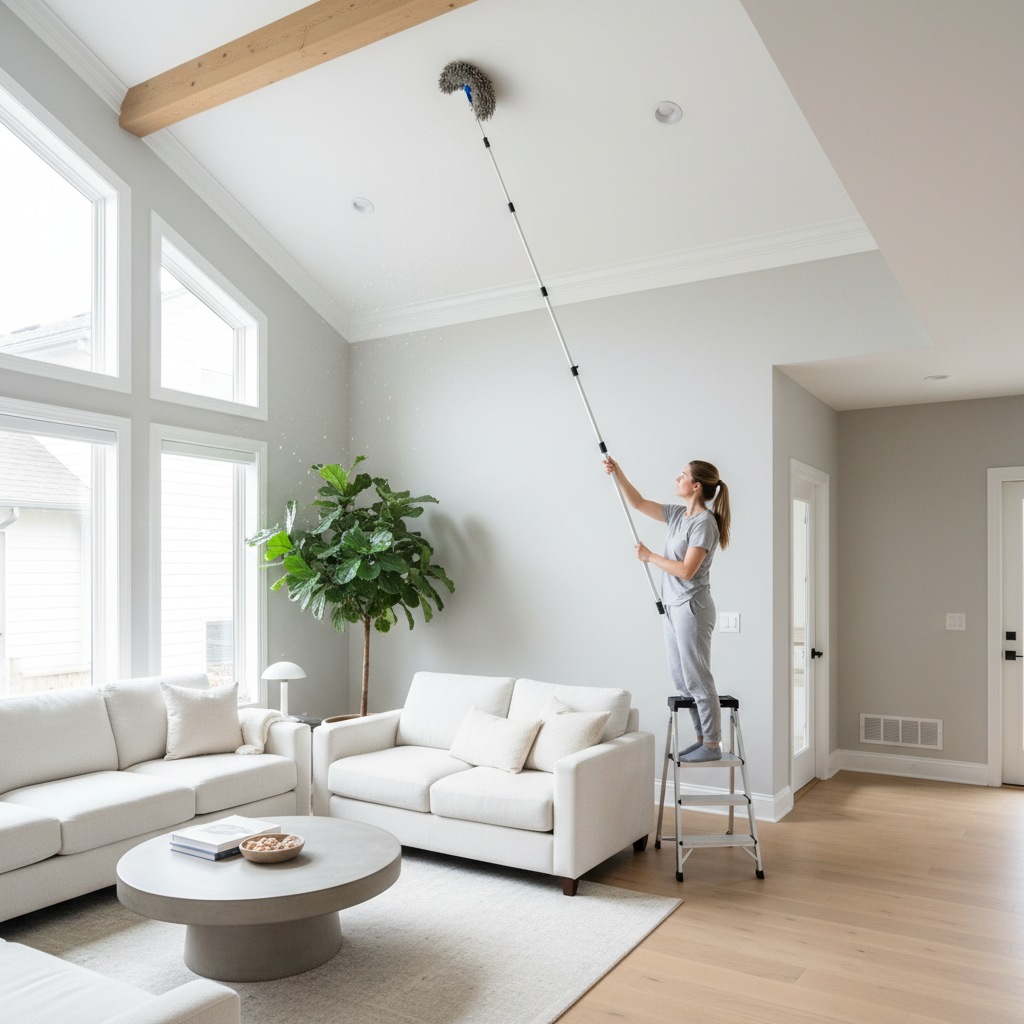
- Ceiling fan blades: Use a pole-mounted duster or the pillowcase method to trap dust without fallout.
- Crown molding/high corners: Angle a microfiber duster upward to hug profiles; rotate the head as you move.
- Baseboards/quarter-round: Vacuum the floor edge first; then wipe with a slightly damp cloth.
- Inside vents: Vacuum with a brush tool; avoid pushing debris deeper.
Bedrooms
- Under-bed center: Use a low-profile vacuum head; finish edges with a dusting wand.
- Closet shelf tops: Dust high-to-low; consider clear bins to reduce future cleaning.
- Behind dressers: Slide carefully on furniture sliders; vacuum cords and baseboard edge.
Laundry/Utility
- Dryer duct port: Detach the hose to clear lint at the connection; reattach firmly.
- Washer gasket groove: Wipe the fold with a cloth dampened with 70% alcohol to remove film.
- Floor drain grate: Lift, brush debris, and rinse; replace securely.
Garage/Entry
- Upper shelving: Use a pole duster; box small items to reduce catch-points.
- Cobweb corners: Sweep with a soft bristle head; inspect lighting for additional dust.
- Door tracks and thresholds: Vacuum grit; wipe with a mild cleaner and dry thoroughly.
Want these results without the ladder time? Our team integrates these hard to reach cleaning tips during deep cleaning, move in/move out service, and routine visits when requested.
Best Practices You Can Trust
Follow a consistent sequence—high to low, dry to wet—and swap cloths before they smear. Use an extension pole before a ladder, maintain three points of contact, and check work in raking light. Small details like edge vacuuming prevent scratches and streaks.
- Rule of reach: Pole first, then ladder. Choose non-slip shoes and keep your centerline between rails.
- Dry-dust before wet: Water on dusty trim creates mud and streaks that are slow to remove.
- Edge vacuuming: Removing grit at the perimeter protects paint and reduces scratching during wipe-downs.
- Lighting check: A simple flashlight across surfaces reveals haze that’s invisible under normal light.
- Cloth rotation: When a microfiber looks foggy, swap it. Fresh cloths leave a crisp finish.
| Task | Primary Tool | Secondary Tool | Notes |
|---|---|---|---|
| Ceiling corners | Extension pole + microfiber head | Step ladder (if needed) | Angle head to hug molding; rotate as you move. |
| Window tracks | Vacuum crevice tool | Wooden skewer + cloth | Vacuum first, then soap and detail edges. |
| Cabinet tops | Degreaser + cloth | Liner replacement | Lay liners after cleaning to catch dust/grease. |
| Fridge coils | Narrow brush | Vacuum | Unplug appliance before brushing and vacuuming. |
| Dryer duct port | Vacuum brush | Flashlight | Check for obstructions and secure reattachment. |
Tools and Resources (Pro Picks)
You don’t need dozens of gadgets. A locking extension pole with interchangeable microfiber heads, a compact vacuum kit with crevice and brush tools, a stable step ladder, and a few gentle cleaners cover 90% of hard-to-reach cleaning at home.
- Extension pole (12–20 ft): Prioritize a locking tip and comfortable grip. Interchangeable heads save storage space.
- Microfiber duster heads: Washable and shaped for molding; keep a spare set for rotation.
- Vacuum attachments: Crevice, brush, and upholstery tools handle tracks, vents, and coils.
- Step ladder: A platform top improves stability and reach comfort.
- Mild cleaners: Degreaser for kitchen film, dish soap for general soil, glass cleaner for sashes, 70% alcohol for spot disinfection.
- Detail kit: Painter’s tape, cotton swabs, wooden skewers, and a soft toothbrush for seams and hardware.
If you’re dealing with stubborn vent grime or persistent odors around air pathways, this primer on ventilation maintenance (ventilation maintenance concepts) outlines why clear grilles and ducts matter for overall air movement—even in residential settings.
Want it done for you? HAARSH KLEAN brings one-on-one service, all supplies provided, and evening/weekend scheduling. We integrate these hard to reach cleaning tips into deep cleaning, appliance cleaning, window cleaning, and move in/move out services—backed by a satisfaction guarantee.
How We Work in Saskatoon Homes
We pair safe reach tactics with a predictable sequence: high dusting, edge vacuuming, targeted wet cleaning, and flashlight verification. The same cleaner returns each visit, so results stay consistent across deep cleans, weekly care, and move-related services.
- Daily & weekly cleaning: Quick high-corner passes, baseboard edges, and vent dust checks built into routines.
- Deep cleaning: Full cabinet-top degrease, fan blade detail, track restoration, and behind-appliance cleaning.
- Appliance cleaning: Fridge coil brushing and vacuuming, oven hood filters, inside-microwave crevices.
- Window cleaning: Streak-free glass, track detailing, and screen dust removal to reduce grit return.
- Move in/out: Landlord-ready baseboards, vents, fans, and inside cabinets—no corner skipped.
- Garage organizing: Upper shelf dusting and cobweb control after sorting and arrangement.
Because we provide all equipment and supplies—including eco-friendly options on request—you won’t need to buy specialty tools just to reach one awkward spot. And with evening/weekend availability and a 24-hour response time, scheduling stays simple.
Case Studies and Real Examples
A systematic approach beats random scrubbing. These Saskatoon snapshots show how tool choice and sequence reduce time on ladders and deliver a spotless finish in the places people notice last—but feel first.
- Apartment move-out refresh: Window tracks vacuumed and detailed, fan housings cleared, and baseboards wiped high-to-low. Result: smooth inspection and a noticeably brighter space.
- Busy family kitchen reset: Cabinet-top film cut with a mild degreaser, hood filters soaked and rinsed, fridge coils brushed and vacuumed. Result: faster weekly wipe-downs and better airflow around the fridge.
- Seniors’ residence ventilation clean: Safe ladder setup for ceiling corners and bathroom exhaust fan cleaning. Result: fresher air flow and less dust resettling on furniture.

We often hear, “I didn’t realize how much dust was up there.” That’s normal. Once high and hidden areas are addressed, rooms feel lighter—light fixtures shine cleaner, and the “dust returns tomorrow” problem eases.
Safety and Ergonomics (Do It Right)
Use extension poles before ladders, follow the 4:1 ladder angle rule, and keep three points of contact. Wear non-slip shoes, clear trip hazards, and never overreach. Short sessions with proper posture beat marathon cleans for both results and comfort.
- 4:1 rule: For every 4 feet of height, place the ladder 1 foot out from the wall.
- Centerline rule: Keep your belt buckle between rails to avoid side loading.
- Grip and stance: One hand for the ladder, one for the task; feet planted on a stable rung or platform.
- Room prep: Coil cords, move stools, and keep pets clear to reduce snags and trips.
- Pace yourself: Rotate tasks to avoid shoulder fatigue; swap arms when dusting.
Troubleshooting Stubborn Spots
If residue resists, step back to the basics: remove loose grit first, choose the right cleaner, allow proper dwell time, and agitate gently with the correct tool. Most “impossible” grime yields once those fundamentals line up.
- Grease above cabinets: Use a mild degreaser, let it dwell, then wipe with a fresh cloth—repeat with light pressure.
- Calcified shower track film: Loosen soap scum with dish soap first; avoid harsh abrasives on aluminum.
- Lint-packed dryer port: Vacuum with a brush tool; confirm airflow at the exterior vent once reattached.
- Fan blade buildup: Pillowcase method to trap debris; follow with a damp microfiber for the final pass.
- Baseboard scuffs: Try a damp microfiber first; escalate to a gentle cleaner before any melamine foam.
Maintenance Schedule You Can Keep
Anchor small, high-impact details monthly—then schedule quarterly deep dives for coil, track, and cabinet-top work. Use move-related cleans to reset everything. This cadence keeps dust from regrowing and shortens your routine by tackling the true sources.
- Weekly: Quick high-corner dust pass, edge vacuum along baseboards, vent grille wipe where visibly dusty.
- Monthly: Fan blades, light fixtures, window tracks spot-cleaned.
- Quarterly: Cabinet tops degreased, behind-appliance cleaning, fridge coil brush/vacuum.
- Annually: Dryer duct port inspection and lint removal.
Need a reset before guests or a move? Our deep cleaning and move in/move out services apply this full list, then leave you with a simple upkeep plan.
Key Takeaways
Use extension poles before ladders, clean high-to-low and dry-to-wet, vacuum edges to prevent scratching, and inspect with a flashlight. Pair each task with a specific tool, and schedule monthly details plus quarterly deep dives to keep dust from coming back.
- Follow one sequence: high → edges → vacuum → wet clean → inspect.
- Match tools to tasks; don’t overbuy—versatility wins.
- Rotate clean cloths early to avoid haze and streaks.
- Batch similar motions across rooms to save time.
- Ask for help when reach or safety is a concern—results matter more than DIY pride.
Frequently Asked Questions
These concise answers address the most common hard to reach cleaning tips homeowners ask us about in Saskatoon. Each response gives you the safest sequence and the simplest tool that gets the job done without damage.
How do I clean window tracks without scratching the metal?
Vacuum grit with a crevice tool first. Add a small bead of dish soap and warm water, agitate with a nylon brush, then lift corners with a wooden skewer wrapped in cloth. Rinse lightly and towel dry. This sequence cleans fast without scratching.
What’s the safest way to dust a high ceiling fan?
Use a locking extension pole with a microfiber sleeve so you can stay on the floor. If a ladder is necessary, keep your belt buckle between the rails and maintain three points of contact. Finish with a slightly damp cloth to remove film.
How often should I clean dryer vents and ports?
At least once a year, sooner if drying takes longer than one cycle or the exterior flap sticks. Clearing lint at the port and checking for good airflow helps your dryer work efficiently and reduces heat buildup.
Are harsh abrasives okay for shower door tracks?
Skip harsh abrasives on aluminum. Instead, vacuum grit, use dish soap to loosen soap scum, and agitate with a nylon brush. Detail edges with a wooden skewer wrapped in cloth, then rinse lightly and dry.
When should I call a professional instead of DIY?
If reach or stability is a concern, residue won’t budge, or you’re preparing for a move or inspection, hire a pro. At HAARSH KLEAN, we bring all supplies, safe reach tools, and a make-it-right guarantee to deliver consistent results.
Related Articles and Next Steps
If you found these hard to reach cleaning tips helpful, bookmark this guide and plan a monthly detail block. For a full reset, combine this playbook with a deep cleaning or move in/out service so your routine stays quick and easy afterward.
- Deep cleaning checklist for high and hidden areas (coming soon)
- Window track and sash care through Saskatoon’s seasons (coming soon)
- Appliance coil and vent basics for better airflow (coming soon)
HAARSH KLEAN
Need help keeping your home clean?
Book professional residential cleaning in Saskatoon and surrounding areas. Same cleaner, personal service, and a clean home you can actually enjoy.
Get Free Quote