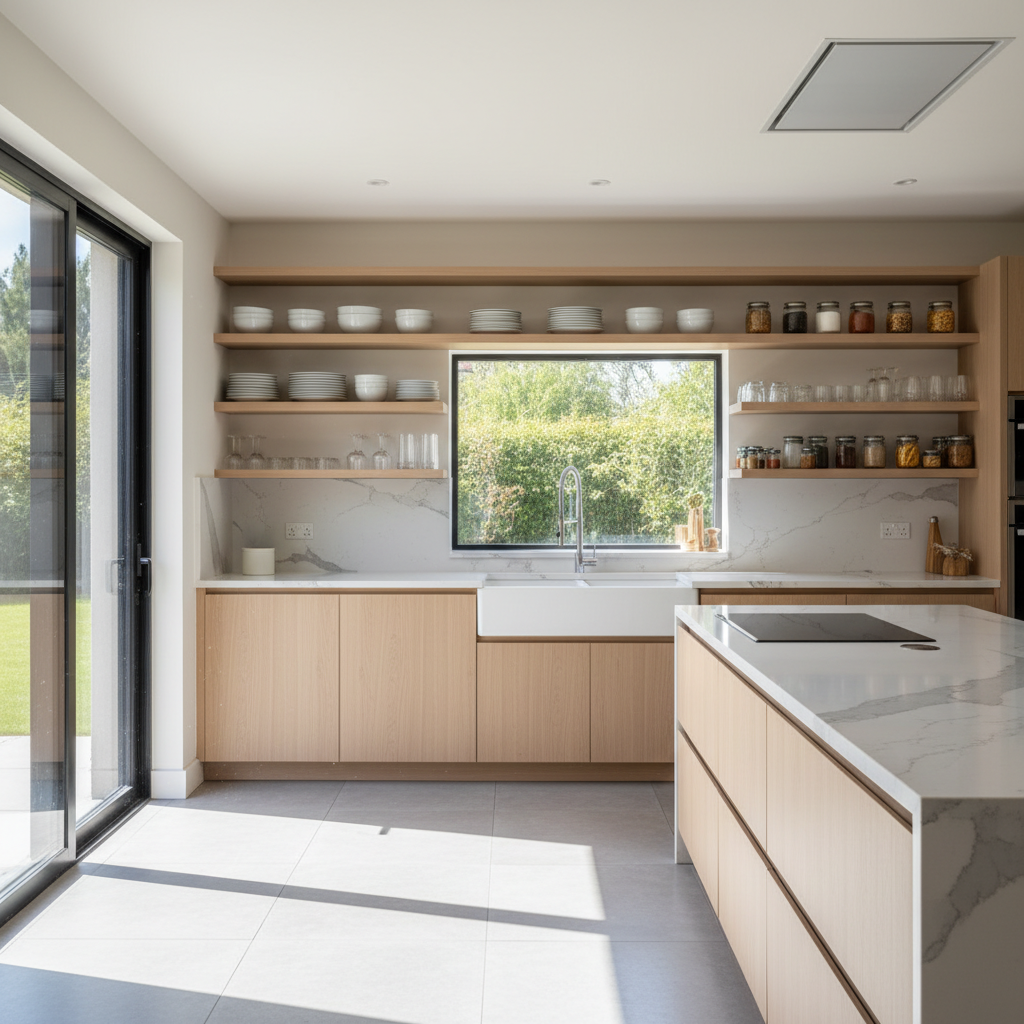
Inside cabinet cleaning tips are the practical steps to empty, degrease, sanitize, dry, and reline kitchen and bathroom storage so shelves stay safe, odor-free, and organized. For Saskatoon homes, HAARSH KLEAN focuses on quick, low-fume methods that protect finishes and reduce allergens—ideal for busy families, renters, and seniors who want reliable, professional results.
By Harsh Kewlani • Founder, HAARSH KLEAN • Last updated: 2026-05-07
Overview: what you’ll learn
This guide explains what inside-cabinet cleaning is, why it matters for food safety and air quality, and how to do it step-by-step. You’ll learn finish-safe methods, recommended tools, pro checklists, and when to bring in HAARSH KLEAN for deep cleaning or move-in/move-out service in Saskatoon.
Here’s how this complete guide helps you clean smarter, faster, and safer at home in Saskatoon.
- Clear definitions: What counts as “inside-cabinet” cleaning vs. surface wipe-downs.
- Finish-safe methods: Techniques for wood, laminate, thermofoil, and painted cabinets.
- Step-by-step process: Empty, label, degrease, sanitize, dry, reline, and organize.
- Health-first tips: Ventilation, low-odor products, and quick-dry strategies.
- Time-savers: 20-minute mini-resets and quarterly deep-clean routines.
- Pro insights: What we do during HAARSH KLEAN deep cleans and move-in/move-out visits.
What is inside-cabinet cleaning?
Inside-cabinet cleaning means removing everything from cabinets and drawers, then cleaning interior surfaces—shelves, walls, corners, hardware, and liners—before returning items in an organized, labeled way. It targets grease, crumbs, dust, moisture, and odors that regular exterior wipe-downs miss.
In short, you’re cleaning the storage environment, not just the cabinet doors. That includes:
- Shelves and corners: Where crumbs, pet hair, and dust collect.
- Cabinet walls and seams: Common grease and moisture spots.
- Interior hardware: Hinges, pulls, bumpers, and soft-close mechanisms.
- Existing shelf liners: Replace if torn, stained, or lifting at edges.
- Bins and risers: Wash or sanitize before restocking.
For Saskatoon homeowners, this level of care is ideal before a new season, after a spill, or anytime food storage feels cluttered. HAARSH KLEAN often pairs cabinet interiors with appliance interiors (refrigerator, oven, microwave) for a thorough kitchen reset.
Why inside cabinets matter for health, safety, and comfort
Clean cabinet interiors reduce cross-contamination, deter pests, and cut allergens. Dry, degreased shelves help preserve finishes and prevent odors. For families in Saskatoon, interior cleaning supports a calmer kitchen routine—everything has a place, and you’re not storing food over residue.
Here’s why the inside counts just as much as the door fronts.
- Food safety: Crumbs and sticky films attract pests and foster bacteria. A periodic sanitize (dwell time 2–5 minutes per product label) keeps shelves safer for pantry items.
- Air quality and odors: Degreasing reduces odor hang-time from cooking. Drying shelves fully (aim for 10–15 minutes with doors open) limits musty smells.
- Finish longevity: Residual moisture and acidic spills can haze or swell materials. Gentle pH-neutral cleaners and microfiber protect varnish and thermofoil.
- Faster daily life: Labeled bins, vertical risers, and consistent zones mean you’ll find items in seconds.
- Stress reduction: Visual order reduces decision fatigue—small, daily wins add up.
We’ve found Saskatoon households appreciate methods that work in cool, dry winters and warm summers. Ventilation, quick-dry strategies, and low-fume products fit homes with kids, pets, and seniors.
How inside-cabinet cleaning works: step-by-step
Empty one cabinet at a time, vacuum crumbs, degrease, then sanitize with proper dwell time. Dry completely with doors open, apply fresh shelf liner, and restock items using labeled bins. Schedule a mini-reset monthly and a deeper clean every 3–4 months.
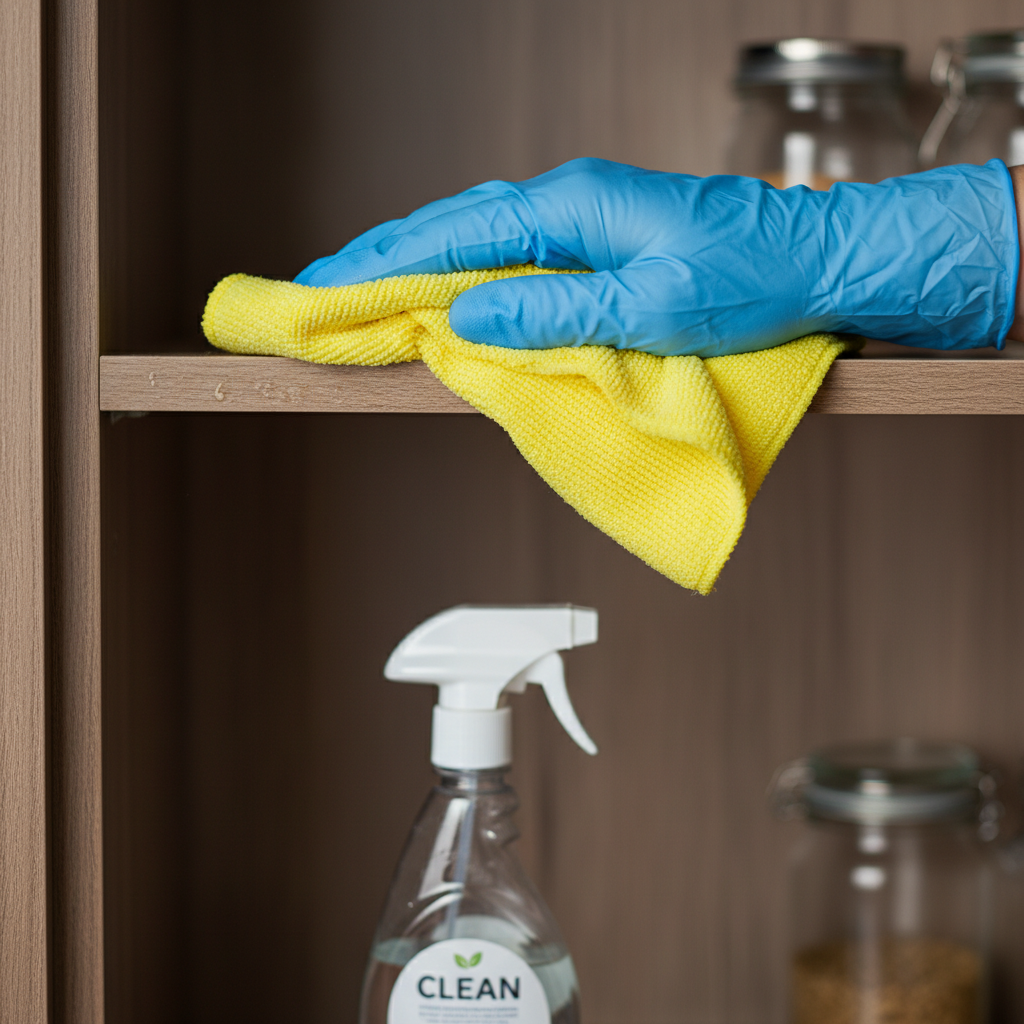
- Prep one zone: Choose a single cabinet or drawer bank. Lay a towel on the counter for temporary staging.
- Empty and sort: Remove items, checking dates and grouping by category (baking, snacks, cans, spices).
- Vacuum crumbs: Use a soft-brush attachment to lift debris from corners and shelf seams.
- Degrease: Spray a finish-safe degreaser or warm, soapy water. Agitate with microfiber; avoid soaking seams.
- Sanitize: Apply a food-contact-safe sanitizer and honor the label’s dwell time (often 2–5 minutes).
- Dry thoroughly: Wipe with a dry cloth, then air-dry with doors open for 10–15 minutes.
- Re-line (optional): Add removable shelf liner, trimming edges for a flat fit that doesn’t curl.
- Restock with intent: Use labeled bins and risers so high-use items live at eye level.
- Polish hardware: Wipe hinges and soft-close dampers; check for loose screws.
- Mini-reset schedule: Block 20–30 minutes monthly per zone and a seasonal deep clean.
Pro tip: Work clockwise around the kitchen to avoid re-soiling clean shelves. We often pair spice cabinet resets with range hood filter cleaning so the whole cooking zone feels crisp in one visit.
Materials, finishes, and the safest cleaning methods
Match your method to the material. Use pH-neutral cleaners for sealed wood and painted cabinets, mild dish soap for laminate and thermofoil, and isopropyl-alcohol diluted wipes for metal or wire pull-outs. Avoid oversaturation and abrasives that dull finishes.
Each cabinet surface responds best to a tailored approach.
Sealed or painted wood
- Cleaner: pH-neutral wood-safe spray or warm water with a drop of dish soap.
- Technique: Lightly mist microfiber; avoid soaking seams and exposed ply.
- Watch-outs: Excess water can swell edges; always dry with doors open.
Laminate and thermofoil
- Cleaner: Mild dish soap solution or non-abrasive all-purpose cleaner.
- Technique: Circular wipe for grease, linear wipe to finish; buff dry to prevent streaks.
- Watch-outs: Heat and heavy scrubbing can lift edges; use a soft pad.
Metal roll-outs and wire racks
- Cleaner: Diluted isopropyl alcohol (70% → dilute 1:1) or mild degreaser.
- Technique: Wipe, then dry to prevent spotting; lubricate slides if noisy.
- Watch-outs: Avoid chlorine-based products that can corrode metal.
Natural wood interiors (unfinished)
- Cleaner: Very light dish soap solution on a damp—not wet—cloth.
- Technique: Minimal moisture, immediate dry; consider adding removable liners.
- Watch-outs: Unfinished wood stains easily; test in an inconspicuous spot.
| Material | Go-to cleaner | Scrub level | Dry time | Avoid |
|---|---|---|---|---|
| Sealed wood / paint | pH-neutral spray | Light–moderate | 10–15 minutes | Standing water, abrasives |
| Laminate / thermofoil | Mild dish soap | Moderate | 10 minutes | Scouring pads, heat |
| Metal roll-outs | Diluted alcohol | Light | 5–10 minutes | Chlorine products |
| Unfinished wood | Very light soap | Light | 10–20 minutes | Saturation, strong degreasers |
When we deep clean in Saskatoon homes, we default to microfiber, pH-neutral cleaners, and measured dwell times to protect finishes while removing residue.
Bathroom vanity and laundry cabinets: moisture-smart tactics
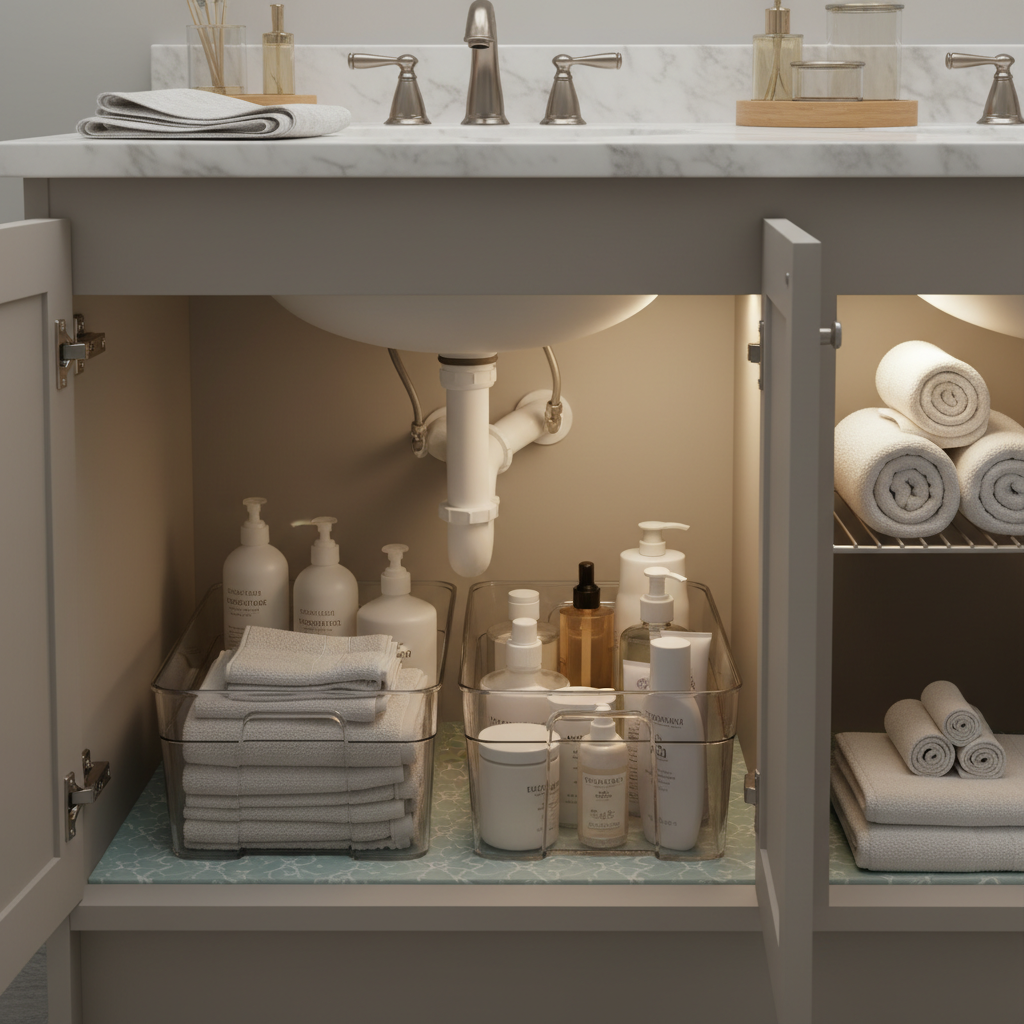
Treat bathroom and laundry cabinets like high-moisture zones: speed up drying, use removable bins under sinks, and pick liners that resist mildew. Wipe plumbing and P-traps, then ventilate doors open for 15 minutes to prevent musty odors.
Wet environments need a different playbook.
- Under-sink defenses: Use waterproof trays or bins under plumbing and inspect for drips.
- Vent and dry: Doors open 15–20 minutes after sanitizing to dissipate humidity.
- Mildew-resistant liners: Removable, washable liners make quick work of future spills.
- Product labeling: Separate cleaning chemicals from skincare or first-aid supplies.
- Laundry lint control: Vacuum cabinet corners near washers/dryers to prevent dust cakes.
Organization systems that stick
Simple systems win: labeled bins, tiered risers, turntables for oils and sauces, and file-style pan racks. Keep daily-use items at eye level, backstock up high, and heavy cookware down low to protect backs and doors.
Organization should support how your family actually cooks and cleans.
- Zones by task: Baking, breakfast, lunch prep, coffee/tea, snacks.
- Turntables (lazy Susans): Oils, vinegars, sauces—no more sticky corners.
- Tiered risers: Cans and spices stay visible; fewer duplicates.
- File-style racks: Store sheet pans vertically to free shelf space.
- Clear bins with labels: Kids and guests can find and return items without help.
- Backstock strategy: One open container per category; extras on the highest shelf.
In our experience, one 20-minute “reset” per week keeps zones intact. If you skip a reset, plan a 45–60 minute catch-up every few weeks to restore order.
Inside cabinet cleaning tips (Saskatoon-tested)
Work in small zones, use microfiber and pH-neutral cleaners, and honor disinfectant dwell times. Label bins by category, keep daily items at eye level, and ventilate shelves dry. Schedule monthly mini-resets and a seasonal deep clean for lasting results.
- One-in, one-out: When a new pantry item arrives, remove an expired or duplicate.
- Spill plan: Keep a small caddy with microfiber, dish soap, and a scraper inside the pantry.
- Grease control: Wipe adjacent cabinet interiors whenever you clean range filters.
- Quiet hardware: A microfiber dab removes grit from soft-close dampers; tighten loose screws.
- Allergy-aware: For pet households, vacuum corners before wiping to avoid wet hair mats.
- Label low: Labels near bin bottoms survive more wiping than top labels.
Tools and resources we rely on
A basic kit—microfiber cloths, a soft-brush vacuum, a pH-neutral cleaner, a degreaser, isopropyl wipes, gloves, and removable shelf liner—covers most cabinet interiors. Add clear bins, risers, and turntables to sustain order.
We bring all supplies to every appointment, with eco-friendly options on request. For DIYers, start with these essentials:
- Vacuum + soft brush: Faster crumb removal means less scrubbing.
- Microfiber cloths: Trap grease without scratching.
- Finish-safe degreaser: Breaks down cooking film quickly.
- pH-neutral cleaner: Protects sealed wood and paint.
- Isopropyl wipes: Metal racks, sticky labels, and hardware cleaning.
- Gloves + mask: Comfort and respiratory protection in dusty cabinets.
- Removable shelf liner: Easiest future cleanup; replace when stained.
- Bins, risers, turntables: Make “a place for everything” visible and durable.
If you’re organizing a garage or pantry overflow, extend the same bin-and-label system to utility cabinets so seasonal items don’t migrate into the kitchen.
How often should you clean inside cabinets?
Do a light interior reset monthly and a deeper clean every 3–4 months. Households that cook daily or have kids and pets benefit from shorter intervals. Always deep clean before moving in or out, and after any major spill or pest issue.
Frequency depends on use, but these benchmarks work for most homes:
- Monthly mini-reset (20–30 minutes): One or two high-traffic cabinets.
- Quarterly deep clean (60–90 minutes): All food storage zones plus under-sink checks.
- Event-based: After spills, pest sightings, or strong odors.
- Lifecycle moments: Pre-listing, move-in, move-out, or new baby/pet arrivals.
When HAARSH KLEAN handles seasonal resets, we often pair cabinets with interior appliances and window tracks so dust and grease don’t cycle back into clean shelves.
Safety, ventilation, and finish protection
Use low-fume products, ventilate with doors open, and avoid oversaturation. Protect finishes with microfiber and pH-neutral cleaners; follow disinfectant labels for 2–5 minute dwell times. Keep chemicals away from food and store them in labeled bins.
Cabinets concentrate residues in tight spaces. Keep safety first:
- Low-odor choices: Prefer mild cleaners near food storage and children’s items.
- Dwell time = effectiveness: Sanitizers need contact time to work; wiping too soon reduces results.
- Finish care: Test in an inconspicuous corner. Skip abrasives that scratch.
- Separate storage: Store chemicals below or away from food and dishes.
- Gloves and masks: Especially helpful for dust-sensitive or pet households.
For broader home safety context, see a practical cleaning hazards guide that outlines common do’s and don’ts for residential spaces.
Local tips for Saskatoon homes
Account for Saskatoon’s dry winters and warm summers: ventilate longer in winter, manage grease near the range, and plan seasonal resets around holidays and school breaks. Use low-fume products for small condos and seniors’ residences.
Local considerations for Saskatoon
- Plan cabinet deep cleans during shoulder seasons so you can air out spaces without extreme cold or heat.
- During winter, extend dry time a few minutes—indoor humidity drops, but cooler air slows evaporation.
- For apartments and seniors’ homes, pick low-odor products and keep doors open longer for ventilation.
We schedule evening and weekend appointments to match family routines and offer a 24-hour response for bookings and questions.
How HAARSH KLEAN handles inside-cabinet deep cleans
We empty and sort by category, vacuum corners, degrease, sanitize with labeled dwell times, dry with doors open, and reline shelves. We then restock with labeled bins and verify soft-close hardware. You get a photographed after-state and maintenance tips.
Our approach is detail-first but time-smart for busy Saskatoon families:
- Personal service: The same cleaner every visit builds consistency and trust.
- Supplies included: We bring everything, with eco-friendly options available.
- Flexible timing: Evenings/weekends so you don’t lose a workday.
- Make-it-right promise: 100% satisfaction guarantee—if something’s off, we return to fix it.
Thinking about a move? Combine interior cabinets with move-in/move-out cleaning so you start fresh or hand over a spotless space. Ask us to bundle interior appliances, window tracks, and baseboards for a whole-home reset.
Troubleshooting: odors, pests, sticky residue
For odors, deep-clean spills, ventilate, and use breathable liners. For pests, empty completely, vacuum corners, sanitize, and store food in airtight bins. For sticky residue, warm soapy water plus a plastic scraper lifts gunk without harming finishes.
- Lingering odors: Identify the source (oils, spices, or leaks). Wash bins and replace liners.
- Pest prevention: Airtight storage and monthly resets cut attractants.
- Sticky labels: Loosen with warm water; use isopropyl on metal racks only.
- Moisture marks: Keep doors open longer; use waterproof trays under sinks.
- Scuffed paint: Touch up only after the surface is fully clean and dry.
If kitchen air still feels heavy after a deep clean, these kitchen air quality tips offer complementary ventilation ideas for cooking zones.
Quick case examples from Saskatoon homes
Busy families, renters between leases, and seniors benefit most from cabinet interior resets. We reduce grease and odors, standardize zones with labeled bins, and pair cabinets with appliance interiors for a fast, whole-kitchen refresh.
- Busy family kitchen: We grouped snacks, breakfast items, and baking supplies; degreased two upper cabinets near the range; added turntables for oils. Weekly 20-minute resets keep it tidy.
- Move-in reset: After a handover, we sanitized all shelves, relined, and organized backstock up high. The new owners unpacked in a few hours—no stickiness or odors.
- Seniors’ condo: Low-odor products, slower pace, and clear labels. Heavy cookware moved to lower cabinets with file-style racks for safer reach.
These small changes make daily routines smoother—fewer duplicates, fewer spills, faster cooking.
Printable checklist: cabinet interior reset
Use this 10-step checklist to reset any cabinet quickly: empty, sort, vacuum, degrease, sanitize, dry, reline, restock, label, and review. Repeat monthly for high-use zones and seasonally for the whole kitchen.
- Empty and date-check
- Sort by category
- Vacuum corners and seams
- Degrease shelves and walls
- Sanitize (2–5 minute dwell time)
- Dry with doors open (10–15 minutes)
- Add or replace shelf liner
- Restock by zone at eye level
- Label bins and risers
- Review hardware and plan next reset
If you’d like us to do the first reset, we can complete a kitchen zone in one visit and leave you with a simple maintenance plan.
Frequently Asked Questions
Most cabinet interiors need monthly mini-resets and seasonal deep cleans. Use pH-neutral cleaners, honor dwell times, and ventilate longer in winter. Replace stained shelf liners and store chemicals away from food.
How often should I clean inside kitchen cabinets?
Aim for a 20–30 minute mini-reset monthly and a deeper clean every 3–4 months. Households that cook daily or have kids and pets may prefer shorter intervals. Always deep clean after spills, pest sightings, or before moving in or out.
What cleaner is safest for wood cabinet interiors?
Use a pH-neutral, wood-safe cleaner and microfiber. Lightly mist the cloth—avoid soaking edges or seams. Dry immediately and leave doors open 10–15 minutes. Always spot-test an inconspicuous area first.
Do I really need shelf liners?
Liners aren’t mandatory, but they make future cleanups faster and protect finishes. Choose removable, non-adhesive liners in food cabinets and waterproof trays under sinks. Replace liners when they stain, curl, or trap odors.
How do I stop pantry odors?
Remove everything, wash bins, and deep-clean sticky spots. Sanitize shelves with label-recommended dwell time, then dry with doors open for 10–15 minutes. Store pungent items in sealed containers and keep a monthly reset on your calendar.
When should I call a professional?
If you’re short on time, preparing to move, recovering from a spill or pest issue, or want a whole-kitchen reset, bring in HAARSH KLEAN. We provide supplies, flexible scheduling, and a 100% satisfaction guarantee for Saskatoon homes.
Key takeaways and next steps
Clean cabinet interiors in small zones, match methods to materials, and ventilate dry. Monthly mini-resets maintain order; seasonal deep cleans reset everything. For a fast start, schedule a pro interior clean with HAARSH KLEAN in Saskatoon.
- Empty, degrease, sanitize, dry, and reline—then restock by task-based zones.
- Use pH-neutral cleaners and microfiber to protect finishes.
- Ventilate doors open 10–15 minutes after sanitizing.
- Adopt weekly 20-minute resets; go deeper every 3–4 months.
- Need backup? Our evening/weekend slots make resets painless.
Ready for a calmer kitchen? Book a cabinet interior reset with HAARSH KLEAN and enjoy organized shelves that actually stay that way.
Helpful resources
For broader safety and indoor air context, read practical cleaning hazard overviews and kitchen ventilation tips. Explore organizing ideas for sustainable storage solutions that look good and function daily.
Explore complementary reading for home safety and organization in cooking zones: a concise cleaning hazards overview, practical kitchen air tips, and storage inspiration for kitchen organizing products.
HAARSH KLEAN
Need help keeping your home clean?
Book professional residential cleaning in Saskatoon and surrounding areas. Same cleaner, personal service, and a clean home you can actually enjoy.
Get Free Quote