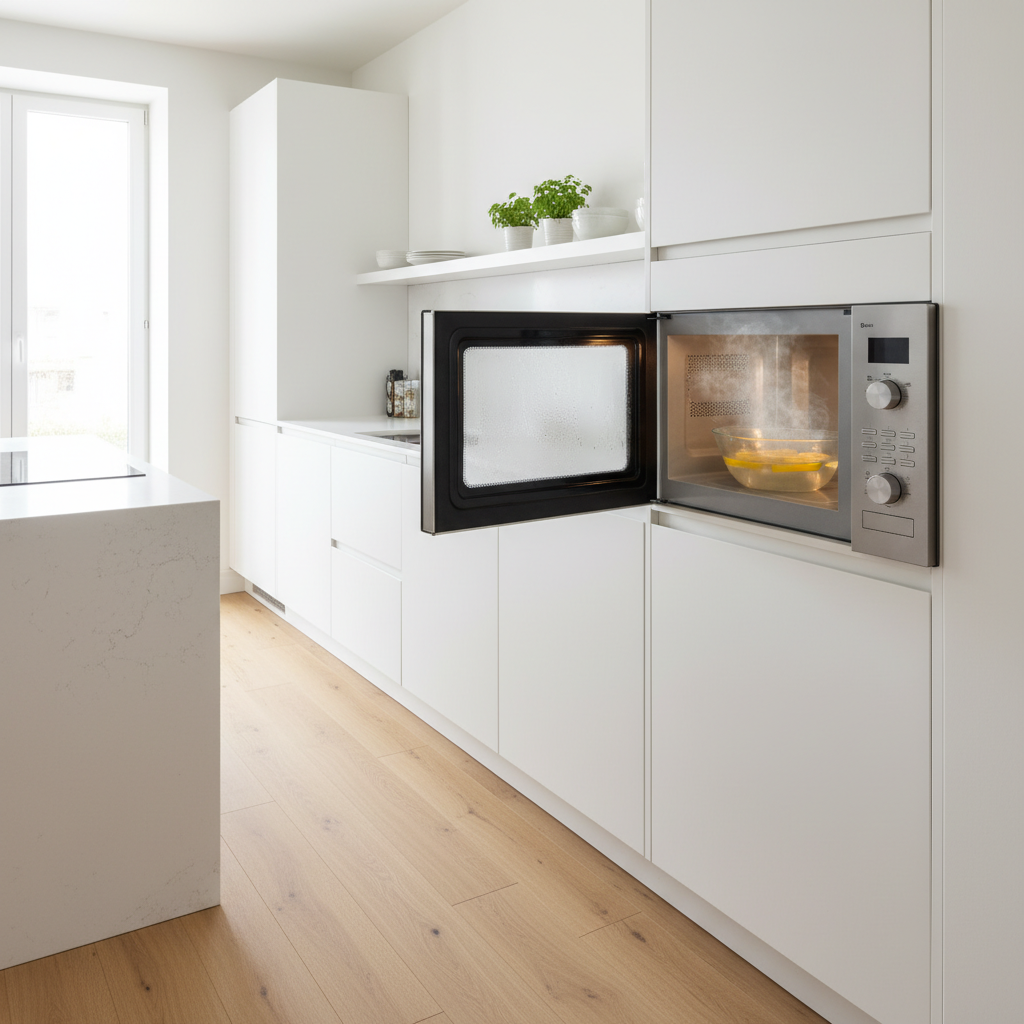
Microwave cleaning hacks are fast, low-effort methods that use steam, mild acids, and gentle abrasives to lift stuck-on splatters and neutralize odors. For Saskatoon homes, these quick steps keep appliances fresh between regular cleans. At HAARSH KLEAN, we use and teach simple, safe techniques so you can maintain a clean microwave between professional visits.
By Harsh Kewlani — Founder, HAARSH KLEAN
Last updated: 2026-05-06
Quick Summary & Table of Contents
Use steam-first methods to loosen grime in 3–5 minutes, then wipe with a microfiber cloth. Lemon or vinegar steam cuts odors; baking soda paste handles stubborn spots. Remove the turntable, clean the door seal, and air dry. Repeat weekly for busy kitchens and after messy splatters.
This complete guide shows you how to clean a microwave quickly and safely with ingredients you already have at home. You’ll find simple steps, safety notes, local tips for Saskatoon homes, and when a pro cleaning helps.
- What are microwave cleaning hacks?
- Why a clean microwave matters
- How steam cleaning works
- 10 proven methods (step-by-step)
- Best practices & safety
- Tools and resources
- Method comparison table
- Real-world examples
- Microwave Cleaning FAQ
- Key takeaways
- Conclusion & next steps
What Are “Microwave Cleaning Hacks”?
Microwave cleaning hacks are quick, low-cost techniques that rely on steam, citrus, vinegar, or baking soda to loosen grease and remove odors. The goal is simple: soften grime in minutes, wipe clean without harsh scrubbing, and prevent damage to interior coatings or the door seal.
At their core, microwave hacks work by softening dried food and grease using heat and moisture. Add a mild acid (lemon, vinegar) or a gentle abrasive (baking soda), and stains release faster. For Saskatoon households juggling work, school, and winter reheats, this saves time while keeping kitchens fresh.
- Steam loosens baked-on splatters in 3–5 minutes, so you wipe instead of scraping.
- Citrus and vinegar neutralize odors from foods like fish, garlic, and curry.
- Baking soda targets stubborn spots without scratching enamel interiors.
- Routine maintenance takes 5–10 minutes weekly to stay ahead of buildup.
As an owner-operated cleaner, we’ve found these methods complement regular service well. They bridge the gap between deep cleans, especially for busy families and apartment residents who reheat meals often.
Why a Clean Microwave Matters
A clean microwave heats more evenly, smells better, and stays safer. Grime absorbs energy and can create hot spots, while residue traps odors. Regular wipe-downs prevent staining, protect the door seal, and reduce the time needed for deeper appliance cleaning later.
Here’s the thing: splatters don’t just look messy—they change how your appliance runs. Damp, sugary buildup warms quickly and can overheat in patches. That means uneven reheating and lingering smells that transfer to the next dish.
- Heat efficiency: A clean cavity reflects energy better, helping food reheat more consistently.
- Odor control: Food residues hold strong smells; citrus or vinegar steam neutralizes them fast.
- Longevity: Regular cleaning protects the door gasket and turntable mechanism from sticky debris.
- Time saved: Five minutes of steam now can prevent 20 minutes of scraping later.
During move-in/move-out cleanings around Saskatoon, we often see microwaves that need extra attention. A single steam cycle followed by a microfiber wipe removes most surface grime and cuts deodorizing time significantly.
For broader kitchen upkeep, resources on air quality improvement tips highlight how consistent cleaning reduces lingering cooking odors across the whole space.
How Microwave Cleaning Works (The Science in Plain English)
Steam lifts grime by softening dried food so it releases with minimal effort. Mild acids (lemon, vinegar) break down grease films, while baking soda adds a gentle scrub. This combination lets you wipe surfaces clean without scratching the interior coating or the door seal.
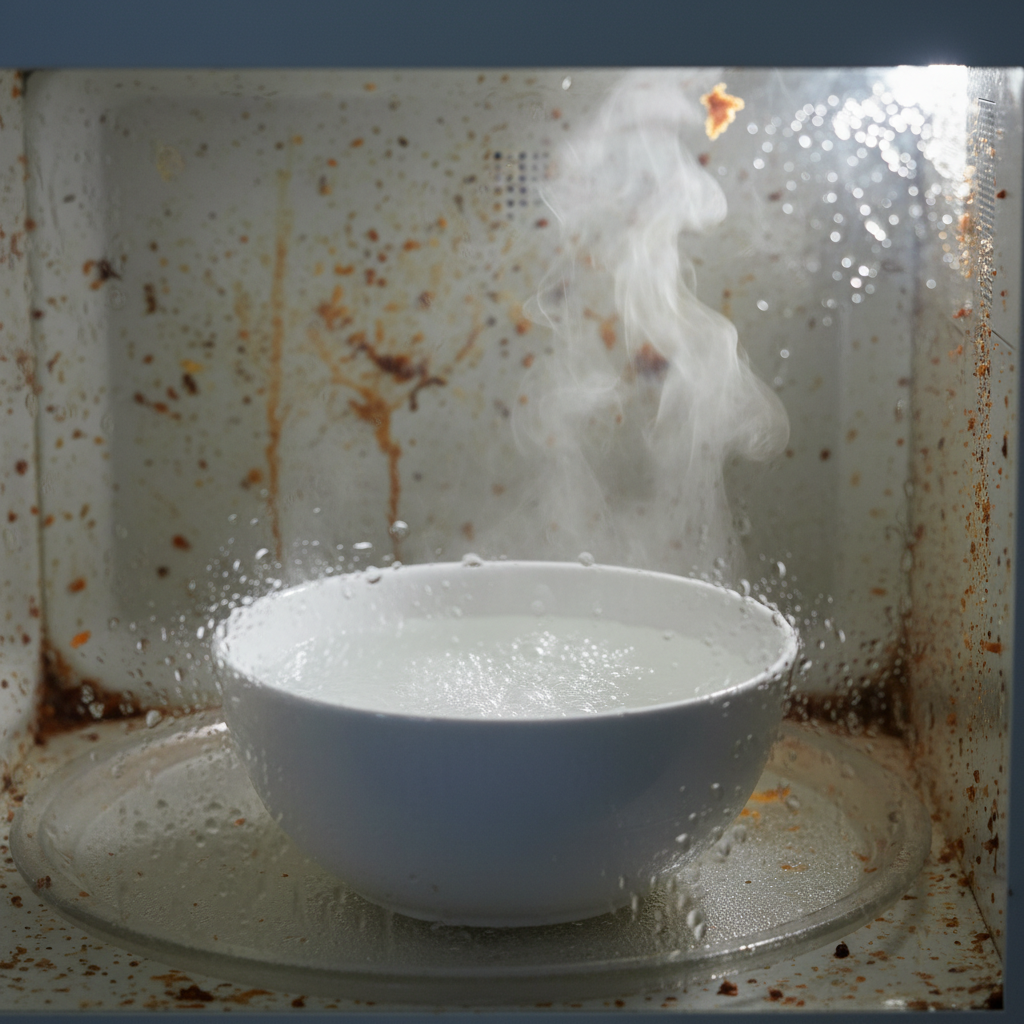
Microwaves energize water molecules in food. When we add a bowl of water (with lemon or vinegar) and heat it, steam condenses on cooler walls and ceiling. That moisture loosens dried sauce, oil, and sugars in just a few minutes.
- Steam condenses on grime, rehydrating it for easy removal.
- Acidic solutions (roughly 1:4 vinegar-to-water) cut grease films and neutralize odors.
- Baking soda paste (3:1 powder to water) provides safe abrasion for stubborn spots.
- Microfiber cloths trap loosened particles better than paper towels and reduce streaks.
In our appliance cleaning service, we follow a simple rule: steam first, scrub second, protect always. That sequence reduces elbow grease, the risk of scratches, and the chance of pushing debris into vents or the door seal.
10 Proven Microwave Cleaning Methods (Step-by-Step)
Start with a 3–5 minute steam cycle, then wipe. Choose lemon for fresh scent, vinegar for strong odors, or baking soda paste for stuck-on spots. Always remove the turntable to clean it separately, and finish by drying the gasket and airing the door open.
Below are the exact microwave cleaning hacks we show Saskatoon clients. Each one lists supplies, steps, and timing so you can pick based on the mess in front of you.
Lemon Steam (Fresh Scent + Light Degrease)
- Supplies: 1 lemon, 1 cup water, microwave-safe bowl, microfiber cloth.
- Steps: Halve the lemon; squeeze into the bowl, then drop the halves in. Microwave 3–5 minutes until steamy. Let stand 2 minutes with the door closed. Wipe walls, ceiling, and door.
- Why it works: Citric acid softens light grease and leaves a clean, bright scent.
Vinegar Steam (Odor Neutralizer)
- Supplies: 1 cup water + 2–3 tablespoons white vinegar, microwave-safe bowl, cloth.
- Steps: Heat 3–5 minutes to produce steam. Rest 2 minutes. Wipe all surfaces and the door glass.
- Why it works: The mild acid dissolves greasy residue and neutralizes strong smells.
Baking Soda Paste (Spot Treatment)
- Supplies: 3 parts baking soda, 1 part water, small dish, soft cloth.
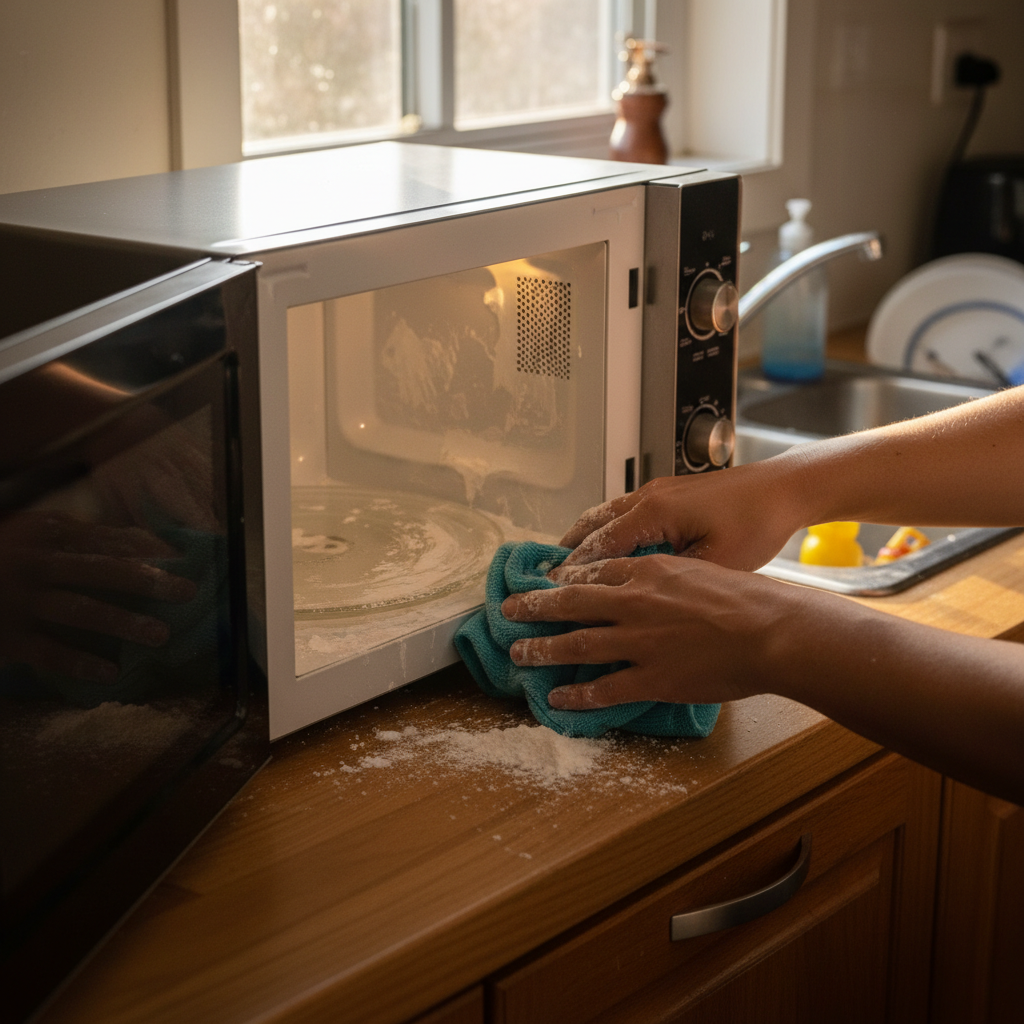
- Steps: After steaming, dab paste on stubborn spots. Rest 5–10 minutes. Wipe gently. Rinse cloth and pass again.
- Why it works: Fine particles add safe abrasion to lift baked-on debris without scratching enamel.
Dish Soap Steam (Quick Degrease)
- Supplies: 1 cup water + 1 teaspoon dish soap, bowl, cloth.
- Steps: Heat 2–3 minutes to steam. Let rest 1–2 minutes. Wipe. Rinse cloth with clean water and wipe again.
- Why it works: Surfactants in soap break the bond between oils and surfaces.
Hot Towel “Reset” (Ultra-Fast Wipe)
- Supplies: Clean, damp microfiber towel.
- Steps: Heat water alone 2 minutes to create humidity. Quickly place the hot, damp towel inside for 30–60 seconds (microwave OFF). Use that warmth to wipe stuck spots.
- Why it works: Warm, humid cloth fibers lift residue in seconds—perfect between meals.
Turntable Deep Clean (Hidden Grime Fix)
- Supplies: Sink, mild dish soap, soft brush.
- Steps: Remove the glass plate and ring. Soak in warm, soapy water 10 minutes. Brush, rinse, dry. Wipe the roller track inside the microwave.
- Why it works: Drips hide under the plate and in the track, causing odors and wobble.
Door Gasket Detailing (Seal Protection)
- Supplies: Cotton swabs, mild soapy water, dry cloth.
- Steps: After steaming, run a slightly damp swab along the gasket groove. Follow with a dry cloth to remove moisture.
- Why it works: Food in the seal holds smells and can affect the door closing tension.
Overnight Deodorizer (Passive Odor Control)
- Supplies: Open box or small bowl of baking soda.
- Steps: After cleaning, leave baking soda in the closed, powered-off microwave overnight. Remove before use.
- Why it works: Baking soda absorbs volatile compounds that cause lingering smells.
Burnt Smell Rescue (Cooked-On Incidents)
- Supplies: Lemon steam or vinegar steam; optional fresh air.
- Steps: Run two steam cycles back-to-back. Wipe surfaces. Leave the door ajar 1–2 hours to air out.
- Why it works: Multiple steam cycles rehydrate carbonized residue and speed up odor dissipation.
Preventive Covers & Routine (Mess Prevention)
- Supplies: Microwave-safe cover or paper towel, microfiber cloth.
- Steps: Cover splatter-prone dishes. Wipe the cavity weekly (or sooner after spills). Clean the turntable every 1–2 weeks.
- Why it works: Prevention keeps weekly care under five minutes—no heavy scrubbing required.
Pro insight: In our deep cleaning appointments, we often pair steam cycles with a brief, gentle scrub using a microfiber edge. This combination removes more grime in less time and protects the interior finish.
Best Practices and Safety Tips
Steam first, then wipe; use lemon or vinegar for odors and baking soda for spots. Avoid harsh abrasives, never run the microwave dry for long periods, and keep moisture away from vents. Dry the gasket and leave the door ajar to prevent musty smells.
Microwaves are durable, but a few habits keep them in top shape. The best approach protects finishes, seals, and electronics while removing grime efficiently.
- Test a small area: If your interior has a specialty coating, test vinegar or paste on a corner first.
- Avoid metal scrubbers: Steel wool and hard scouring pads can scratch enamel or glass.
- Keep liquids shallow: A cup of water is enough—overflow risks the vents and turntable motor.
- Never seal tight containers: Steam pressure can build rapidly; vent any cover you use.
- Mind the vents: Wring cloths well near the vent area; avoid dripping into louvers.
- Dry the seal: Moisture trapped in the gasket can lead to a musty odor. Finish with a dry pass.
- Air it out: Leave the door slightly open for 15–30 minutes after cleaning.
If a spill bakes on after a long cook cycle, combine two methods: a vinegar steam followed by a light baking soda paste. This pairing lifts both greasy films and caramelized sugars without over-scrubbing.
For broader kitchen safety routines, industry-focused clean hood filters guidance reinforces how keeping adjacent equipment clean reduces odors that settle into appliances like microwaves.
Tools and Resources (What You’ll Actually Use)
You need a microwave-safe bowl, water, lemon or vinegar, baking soda, and a microfiber cloth. Optional helpers include cotton swabs for the gasket, a soft brush for the turntable track, and a microwave-safe cover to prevent future messes.
We provide all supplies during appliance cleaning visits, but here’s the short homeowner list to keep handy:
- Microwave-safe bowl (glass or ceramic)
- Clean water (1–2 cups per session)
- Fresh lemon or white vinegar (odor control)
- Baking soda (spot treatment and deodorizing)
- Microfiber cloths (lint-free wiping)
- Soft brush (turntable ring and track)
- Cotton swabs (gasket detailing)
- Microwave-safe cover (splatter prevention)
Want a deeper dive into grease removal theory? Professional summaries of deep cleaning methods show why combining heat, chemistry, and mechanical action works so well—even in small appliances.
Method Comparison: Pick the Right Fix for the Mess
Use lemon steam for light grime and freshness, vinegar steam for strong odors, and baking soda paste for stuck-on spots. Combine steam plus paste for burnt residue. Clean the turntable separately and finish by drying the gasket to prevent musty smells.
| Method | Best For | Time | Odor Control | Finish Safety |
|---|---|---|---|---|
| Lemon Steam | Light splatters, daily upkeep | 5–7 min | Good | Very safe |
| Vinegar Steam | Greasy film, strong odors | 5–7 min | Excellent | Safe (test coated finishes) |
| Baking Soda Paste | Baked-on spots | 10–15 min | Fair | Safe, gentle abrasion |
| Dish Soap Steam | Quick degrease | 4–6 min | Good | Very safe |
| Overnight Deodorizer | Lingering smells | Overnight | Good (passive) | Very safe |
Use this table as your decision guide. When in doubt, start with a short steam cycle and reassess; it’s fast, gentle, and sets up any follow-on step.
Real-World Examples from Saskatoon Homes
We apply a steam-first approach for Saskatoon clients: 3–5 minutes of lemon or vinegar steam, a microfiber wipe, and targeted baking soda paste. This sequence cuts scrubbing time by half in most homes and eliminates lingering odors from frequent reheats.
These quick snapshots mirror what we see in daily and weekly cleaning across apartments, condos, and family homes in Saskatoon:
- Busy family night: After a spaghetti splash, a 4-minute lemon steam plus a 2-minute rest lifted sauce off the ceiling and door. A light paste pass handled two stubborn spots. Total time: under 10 minutes.
- Apartment lunch routine: Daily reheats left a greasy film. A 5-minute vinegar steam followed by a microfiber wipe restored clarity to the glass and cut the stale smell.
- Move-out turnaround: In a rental, burnt popcorn left deep odor. Two vinegar steam cycles back-to-back plus overnight baking soda removed the scent for the next tenant.
- Seniors’ residence touch-up: Gentle cleaning matters. We used dish soap steam and careful gasket drying to freshen the unit without strong fragrances.
Soft CTA: Want a once-over that resets your whole kitchen? During deep cleaning visits, we handle microwaves, ovens, fridges, and more—supplies included—so you can start fresh before maintaining with these microwave cleaning hacks.
Local considerations for Saskatoon
- Winter reheats are frequent. Plan a weekly steam-and-wipe routine to keep up with extra soups, stews, and leftovers.
- Dry indoor air can set splatters fast. Don’t wait—run a 3–5 minute steam cycle within an hour of any mess.
- Busy evenings? Combine tasks: start a steam cycle, then load the dishwasher. Wipe the microwave as soon as the steam rests.
Microwave Cleaning FAQ
Steam with lemon or vinegar for 3–5 minutes, then wipe. Use baking soda paste for stuck spots, clean the turntable separately, and dry the door seal. Repeat weekly or after spills. Avoid harsh abrasives and keep moisture away from vents.
What is the fastest way to clean a really dirty microwave?
Do one vinegar or lemon steam cycle (3–5 minutes), let it rest 2 minutes, then wipe with a microfiber cloth. Treat remaining spots with baking soda paste for 5–10 minutes and wipe again. Remove and wash the turntable separately for the best results.
Is it safe to use vinegar in the microwave?
Yes—dilute white vinegar in water (about 2–3 tablespoons per cup). Heat until steamy, rest briefly, and wipe. It’s a mild acid that helps cut grease and odors. If your interior has a special coating, test on a small corner first.
How do I get rid of burnt popcorn smell?
Run two back-to-back vinegar steam cycles, wipe clean, then leave an open bowl of baking soda inside overnight. Ventilate the kitchen and leave the door ajar for an hour. This combination removes most lingering odors by morning.
Can I use baking soda paste on any microwave interior?
In most standard enamel interiors, yes. Make a mild paste, apply after steaming, and wipe gently. Avoid scrubbing on soft plastic windows or specialty non-stick coatings. When unsure, test a tiny area first and use a softer method.
How often should I clean the microwave?
Wipe weekly for busy households and immediately after messy splatters. Deep-clean the turntable and gasket every 2–4 weeks. If you reheat daily, a 3–5 minute steam cycle once a week keeps buildup under control.
Key Takeaways
Steam is the fastest, safest way to clean a microwave. Pair lemon or vinegar with a microfiber wipe, add baking soda paste for stubborn spots, and dry the gasket. Keep a weekly routine and cover splatter-prone dishes to prevent heavy buildup.
- Steam-first unlocks grime in minutes and reduces scrubbing.
- Lemon or vinegar handles odors; baking soda tackles baked-on spots.
- Remove and wash the turntable; clean the door seal with care.
- Air-dry with the door ajar to prevent musty smells.
- Make it routine: a weekly 5–10 minute reset prevents deep buildup.
Conclusion & Next Steps
Use a simple sequence—steam, wipe, spot-treat, and dry—to keep your microwave fresh. Build a weekly routine, cover messy dishes, and act fast after spills. For a full kitchen reset, book a deep clean and keep these quick hacks for easy upkeep.
Microwave cleaning hacks make everyday maintenance fast and stress-free. If your kitchen needs a full refresh—inside appliances, windows, baseboards, and hard-to-reach areas—our team brings supplies, flexible scheduling, and a make-it-right guarantee. We serve Saskatoon homes, apartments, condos, seniors’ residences, and vacation homes with respectful, detail-focused care.
Ready for a cleaner week? Book a deep or appliance cleaning visit, then use these steps to stay fresh between appointments. Evening and weekend options are available for Saskatoon families and renters.
HAARSH KLEAN
Need help keeping your home clean?
Book professional residential cleaning in Saskatoon and surrounding areas. Same cleaner, personal service, and a clean home you can actually enjoy.
Get Free Quote