Refrigerator cleaning is the systematic sanitizing, deodorizing, and organizing of your fridge to protect food safety, freshness, and energy efficiency. In Saskatoon, HAARSH KLEAN offers professional appliance cleaning so busy households can rely on a spotless, food-safe fridge without losing a weekend. This refrigerator cleaning guide covers quick resets, deep cleans, and upkeep that keeps meals safe.
By Harsh Kewlani — Founder, HAARSH KLEAN
Last updated: 2026-05-09
Above the Fold: Hook + Table of Contents
Clean your refrigerator by unplugging it, emptying perishables into a cooler, washing shelves and drawers in warm soapy water, wiping interior surfaces with a food-safe cleaner, drying fully, and resetting to 37–40°F. Organize by zones—raw meats lowest, produce in crispers—for safer storage and easier meals.
You want a clean fridge that keeps food safe and cuts waste—without spending all day. In our experience serving Saskatoon homes, the best approach is a practical routine you actually follow. Use this refrigerator cleaning guide to move from “overdue clean” to a 60–90 minute reset that sticks.
- What refrigerator cleaning is and why it matters
- Supplies, safety, and timing (prerequisites)
- Step-by-step deep cleaning method
- Quick weekly resets vs. quarterly deep cleans
- Troubleshooting odors, frost, and moisture
- Maintenance schedule and safe storage table
- Local considerations for Saskatoon households
- When to call a professional cleaner
At a Glance: Summary
Wipe spills weekly, clean shelves monthly, deep clean every 1–3 months, and vacuum condenser coils quarterly. Keep the fridge ≤40°F and freezer at 0°F. Date leftovers, store raw meat on the lowest shelf, and keep door gaskets clean for a better seal and lower energy use.
Here’s the fast plan homeowners actually follow:
- Weekly: Toss expired items, wipe spills, sanitize handles, check gaskets.
- Monthly: Remove and wash bins/shelves; wipe interior seams and vents.
- Quarterly: Deep clean, replace filters, and vacuum coils and rear vents.
- Always: Fridge 37–40°F; freezer 0°F. Avoid overpacking to maintain airflow.
What Is Refrigerator Cleaning?
Refrigerator cleaning is routine removal of spills, residue, and microbes from interior surfaces, shelves, drawers, and gaskets, followed by safe food reorganization. The goal is simple: protect food safety, reduce odors, and help the appliance maintain ≤40°F efficiently.
Think of this as three jobs in one: sanitation, organization, and performance. When you remove sticky spills and expired items, you lower cross-contamination risk. When you group foods by zone, you spot ingredients faster and waste less. When you keep gaskets, vents, and coils clean, the compressor cycles less often.
Why Refrigerator Cleaning Matters
A clean refrigerator reduces foodborne risk, prevents lingering odors, and helps the unit cool more efficiently. Clear shelves and organized zones also cut weekly food waste by making leftovers visible and safe to eat within recommended time frames.
Here’s the thing: at fridge temperatures, spills don’t “sterilize”—they just chill. Residue can harbor bacteria, and crumbs in gaskets weaken the door seal, letting warm air in. We’ve found that homes that stick to a monthly interior clean and quarterly coil vacuum see steadier temperatures and fewer “mystery smells.”
- Food safety: Cold slows bacteria but doesn’t kill it; wipe spills promptly.
- Efficiency: Clean gaskets and coils help maintain target temperatures.
- Less waste: Clear bins and date labels keep leftovers from being forgotten.
How a Pro-Level Deep Clean Works (Step-by-Step)
Unplug, stage a cooler, and empty the fridge by category. Wash shelves and drawers in warm soapy water, clean interior panels from top to bottom, detail gaskets, sanitize touchpoints, vacuum coils, dry completely, then reassemble and reset to 37–40°F. Organize by safe-storage zones.
- Power and prep: Unplug or switch off. Stage a cooler with ice packs. Clear a counter for parts.
- Unload smartly: Group foods (dairy, produce, condiments, proteins) and check dates as you go.
- Remove parts: Take out drawers, shelves, door bins. Let cold glass come to room temp before warm water.
- Wash parts: Warm water + a few drops of dish soap. Rinse and fully dry to prevent ice buildup later.
- Clean interior: Ceiling, walls, rails, seams. Use a mild, food-safe cleaner or diluted vinegar; avoid harsh fumes.
- Detail gaskets: Soft brush and soapy water. Dry thoroughly to preserve flexibility and seal.
- Sanitize touchpoints: Handles, controls, and high-touch door edges.
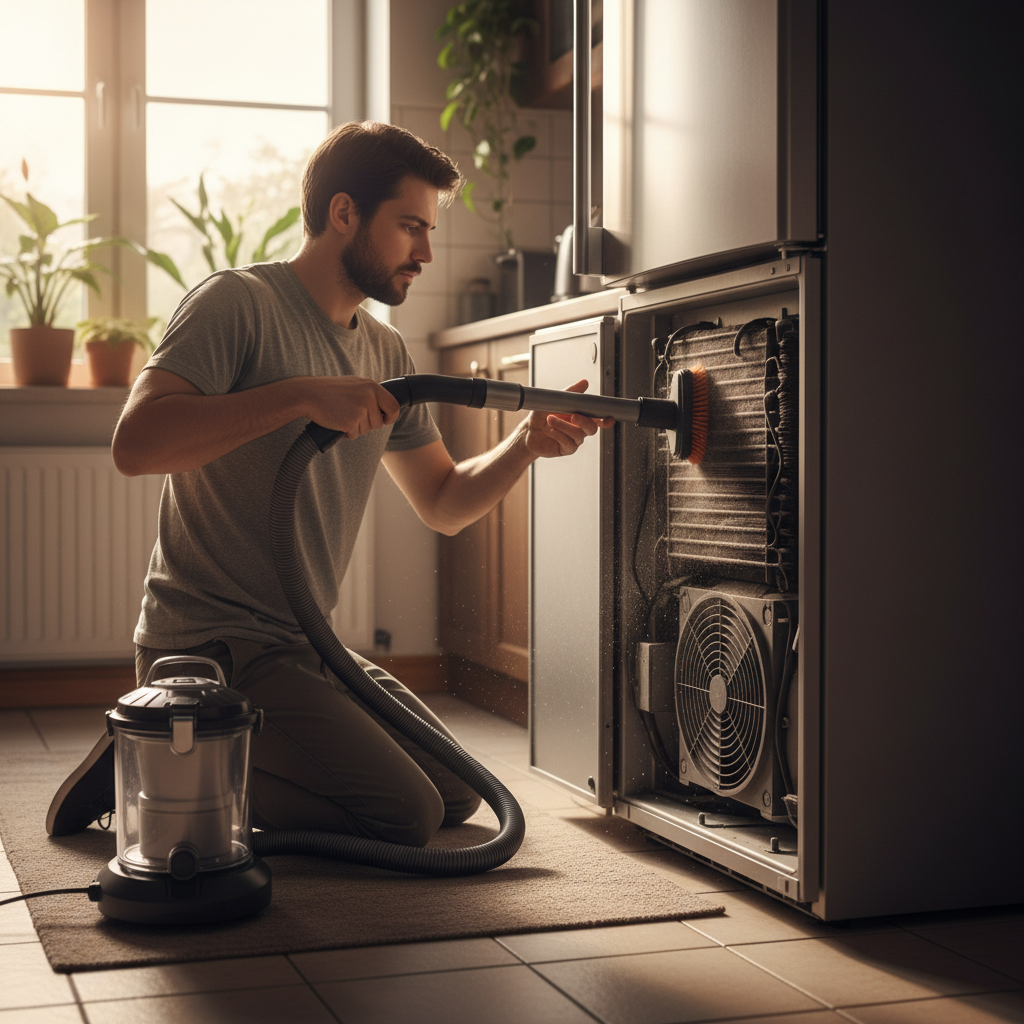
- Coils and back: Carefully vacuum condenser coils and clear dust around rear/bottom vents with a brush tool.
- Reassemble and reset: Replace parts once dry. Set fridge 37–40°F; freezer 0°F.
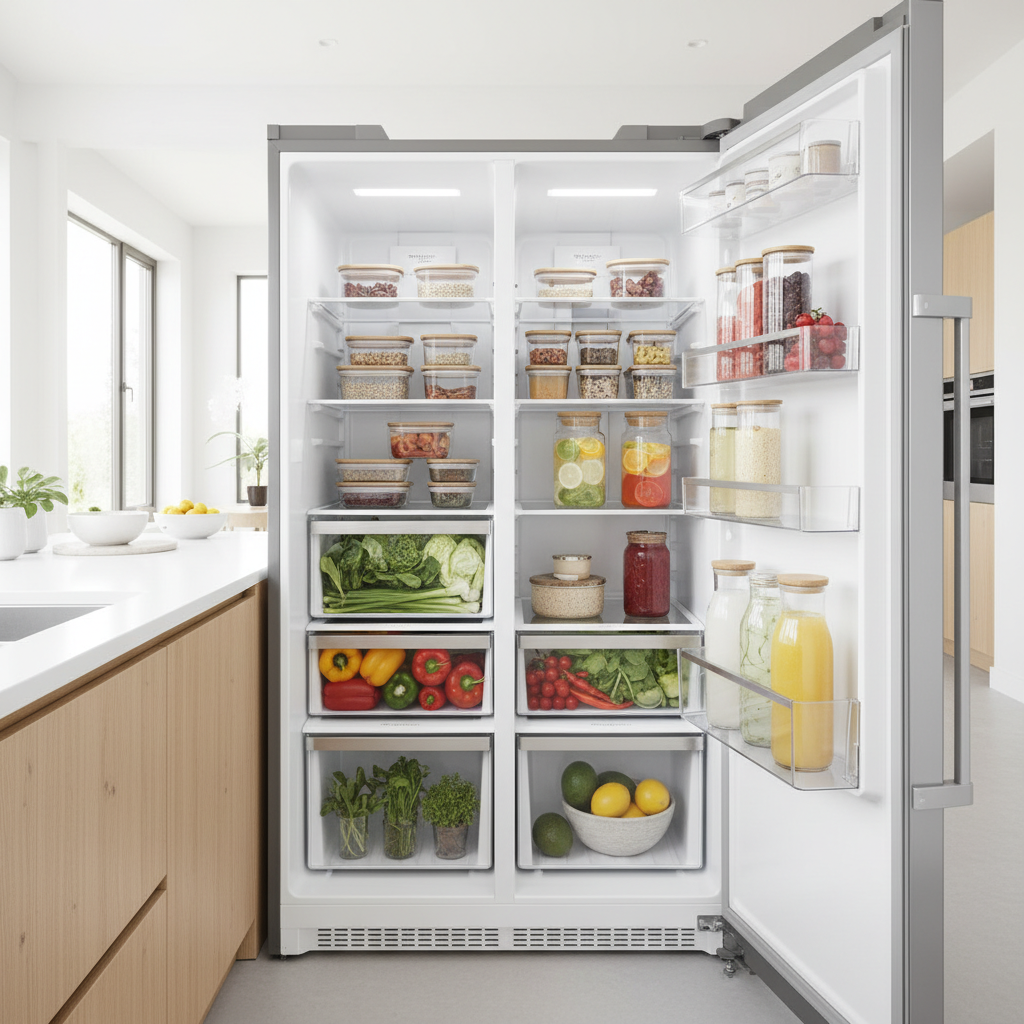
- Organize by zone: Raw meats bottom shelf; dairy mid-shelf; produce in crispers; ready-to-eat foods up high.
In Saskatoon homes, we often coordinate this deep clean with a whole-kitchen reset—wiping pantry shelves and labeling leftovers—so your routine sticks. If your week is jammed, our appliance cleaning service can complete the reset while you’re at work or during an evening slot.
Prerequisites: Supplies, Safety, and Timing
Gather dish soap, baking soda, white vinegar, microfiber cloths, a non-scratch sponge, a soft brush, a coil brush, a vacuum with a brush attachment, trash bags, and a cooler with ice packs. Plan 60–90 minutes for a deep clean. Unplug first and keep kids and pets clear.

Checklist: Your deep-clean kit
- Microfiber cloths and a non-scratch sponge
- Dish soap, baking soda, and white vinegar (never mix with bleach)
- Food-contact-safe disinfectant for handles and controls
- Soft toothbrush for gaskets and rails
- Coil brush and vacuum with brush tool
- Cooler with ice packs and trash/recycling bags
Timing tips we share with clients
- Pick a morning window so the fridge is back to temp before dinner.
- Combine with trash night so expired items exit the house immediately.
- Put a simple shelf thermometer on the middle shelf to verify ≤40°F.
Types of Fridge Cleanings: Quick Reset, Deep Clean, Move-In/Out Sanitize
Use a 10-minute Quick Reset weekly for spills and expired items, a 60–90 minute Deep Clean every 1–3 months, and a full sanitize for move-in/out. This cadence keeps odors down, food safer, and cooling consistent in busy households.
Quick Reset (about 10 minutes)
- Scan for spills and wipe with a damp microfiber cloth.
- Discard expired items; consolidate duplicates.
- Group leftovers front-and-center with date labels.
Deep Clean (60–90 minutes)
- Full unload and removable-part washing in warm soapy water.
- Interior detail from top to bottom; sanitize handles and controls.
- Vacuum coils and clear rear/bottom vents.
Move-In/Out Sanitize
- Focus on gaskets, drip pan, and ice-maker components (if present).
- Wipe the defrost drain channel; confirm no standing water.
- Finish with safe temperatures and a labeled, ready-to-stock interior.
For new tenants or after a renovation, pair this with whole-home Move In/Out Cleaning so every surface meets a fresh standard on day one.
Best Practices for a Cleaner, Safer Fridge
Keep the main compartment at 37–40°F and the freezer at 0°F. Store raw meat on the lowest shelf, wipe spills immediately, and avoid overpacking to maintain airflow. Clean gaskets monthly and replace water/air filters per the manufacturer to control odors and impurities.
- Temperature control: Verify with a shelf thermometer.
- Airflow: Don’t press items against rear vents; leave space between bins.
- Containment: Use leak-proof bins for raw proteins to catch drips.
- Leftovers: Label with dates; most are best within 3–4 days.
- Gaskets: Clean, dry, and inspect for cracks—replace if sealing poorly.
- Filters: Follow your model’s manual for change intervals.
We often combine gasket care with Deep Cleaning and a quick Inside Cabinet Cleaning so the whole kitchen ecosystem stays fresh longer. Small habits compound: clear bins, date labels, and a two-minute wipe at the end of meal prep.
Tools, Resources, and a Handy Checklist
You only need dish soap, baking soda, microfiber cloths, a soft brush, and a coil brush for most fridge cleans. Keep a printed checklist on the door. When time is tight, book professional appliance cleaning and return to a spotless, food-safe refrigerator.
Here’s a checklist you can copy into your notes app:
- Unplug and stage a cooler
- Unload and sort foods
- Wash shelves and drawers
- Clean interior and seams
- Detail gaskets and hinges
- Sanitize handles and controls
- Vacuum coils and vents
- Reset temperatures
- Organize by zone
For extra context on heavy-duty cleaning workflows, see these practical methods in an oven deep cleaning guide. While your fridge doesn’t face oven heat, the degreasing sequence and “top-to-bottom” logic still apply.
Troubleshooting Odors, Mold, and Frost
Persistent odors point to hidden spills, a dirty drip pan, or poor airflow. Mold signals moisture or warm spots. Frost indicates air leaks or frequent long openings. Solve the source: clean the drip pan, rinse the defrost drain, replace damaged gaskets, and confirm temperatures.
Odors that won’t quit
- Empty the shelf, wash the bin, and wipe seams and rails.
- Clean or replace the air filter if your model has one.
- Remove and wash the drip pan; dry fully before replacing.
Spots of mold or slime
- Use diluted white vinegar on non-porous surfaces, then rinse and dry.
- Improve airflow; avoid overpacking and check vent clearances.
- Inspect door gaskets for tears or crumbs that break the seal.
Excess frost or ice
- Check for gaps in gaskets; replace if cracked or hardened.
- Limit door-open time during meal prep; close fully between steps.
- Make sure nothing blocks interior vents or the fan’s path.
Clogged drains and dirty pans are common culprits. For a deep-dive on odor control thinking in kitchen systems, here’s a readable primer on reducing kitchen exhaust odors; different appliance, same airflow principles.
Maintenance Schedule and Safe Storage Table
Follow a weekly wipe-down, monthly interior clean, and quarterly coil vacuum. Keep the fridge ≤40°F and freezer at 0°F. Store raw meat on the lowest shelf, dairy mid-shelf, and produce in crispers. Label leftovers with dates to reduce waste and improve safety.
| Task | Frequency | Why it matters |
|---|---|---|
| Wipe spills and handles | Weekly | Stops bacteria spread and odors |
| Check and discard expired items | Weekly | Frees space and cuts waste |
| Clean shelves and bins | Monthly | Removes residue and resets freshness |
| Vacuum condenser coils | Quarterly | Improves cooling efficiency |
| Replace water/air filters | Per manual | Controls odors and impurities |
| Sanitize gaskets and controls | Monthly | Better seal and hygiene |
Real-World Examples in Saskatoon
Busy families, condo residents, and landlords benefit from routine fridge maintenance. Deep cleans during move-in/out and seasonal resets protect food and restore efficiency. Professional help saves time and ensures thorough disassembly, gasket care, and coil cleaning.
- Busy family reset: A Saskatoon family schedules seasonal deep cleans. Clear bins for snacks reduce weekday chaos and lower wasted produce.
- Condo convenience: An apartment resident books Appliance Cleaning with evening availability before hosting weekend guests.
- Rental turnover: A landlord adds Between-tenant Deep Cleans so every new renter starts with a sanitized kitchen and fridge.
Local considerations for Saskatoon
- Winter brings dry air; keep gaskets conditioned and fully dry after cleaning to prevent cracking.
- During harvest season, batch-prep produce and use crisper humidity settings to keep local greens fresh longer.
- If you’re traveling to a nearby vacation home, do a pre-trip Quick Reset so nothing spoils while you’re away.
When to Call a Professional Cleaner
Call a pro when time is tight, odors persist, mold returns, or you’re preparing for move-in/out. A professional will fully disassemble removable parts, detail gaskets and rails, clean the drip pan and coils, reset temperatures, and organize by safe-storage zones.
HAARSH KLEAN is a local, owner-operated service in Saskatoon that offers Appliance Cleaning, Deep Cleaning, Move In/Out Cleaning, and more. We provide flexible evening and weekend scheduling, all supplies and equipment, and a satisfaction guarantee—so you get results without the disruption.
Soft CTA: Want a spotless, food-safe fridge without losing your Saturday? Reach out to HAARSH KLEAN to schedule an appliance cleaning and we’ll handle the reset while you get on with your week.
FAQ: Refrigerator Cleaning
Set refrigerators to 37–40°F, clean interiors monthly, and deep clean quarterly. Wash shelves and bins in warm soapy water, wipe gaskets, and vacuum coils. Store raw meat on the lowest shelf and label leftovers. If time is tight, book professional appliance cleaning.
How often should I deep clean my refrigerator?
Plan a deep clean every 1–3 months, with weekly wipe-downs and a quarterly coil vacuum. Homes with kids, frequent cooking, or pets benefit from monthly deep cleans to control spills, odors, and cross-contamination.
What temperature should my fridge be?
Keep the main compartment at 37–40°F and the freezer at 0°F. Place a simple thermometer on a middle shelf to verify. Warmer settings increase spoilage risk; colder settings can freeze produce and increase energy use.
Is vinegar safe for cleaning a refrigerator?
Yes. A diluted white vinegar solution cuts grease and light mildew on non-porous surfaces. Rinse and dry afterward to remove any lingering odor. Don’t mix vinegar with bleach or ammonia and keep sprays off electrical components.
How do I get rid of fridge odor fast?
Empty the source shelf, wash the bin, and wipe nearby surfaces. Clean the drip pan if accessible. Place an open box of baking soda or coffee grounds to absorb odors. Persistent smells often mean residue under drawers or a clogged drain.
When should I call a professional cleaner?
If you’re short on time, dealing with a strong odor or mold issue, preparing for a move, or want a full appliance reset (including gasket detailing and coil vacuuming), booking professional appliance cleaning ensures a thorough, safe result.
Wrap-Up: Key Takeaways and Next Steps
Deep clean every 1–3 months, verify 37–40°F, and organize by safe-storage zones. Quick weekly resets prevent odors and waste. If you want a spotless, food-safe reset without the hassle, book professional appliance cleaning and get your time back.
- Keep fridge ≤40°F; freezer 0°F
- Weekly wipe-downs; monthly interior cleans
- Quarterly coil vacuum for efficiency
- Raw meats low; produce in crispers
- Date leftovers to cut waste
Final CTA: Live in Saskatoon and ready for a fridge reset? Book an appliance cleaning with HAARSH KLEAN and come home to a clean, organized, food-safe refrigerator.
HAARSH KLEAN
Need help keeping your home clean?
Book professional residential cleaning in Saskatoon and surrounding areas. Same cleaner, personal service, and a clean home you can actually enjoy.
Get Free Quote